DevOps on AWS Workshop
⚠️ Note: The information below is for reference purposes only. Please do not copy it verbatim into your report, including this warning.
Summary Report: “DevOps on AWS Workshop”
Event Objectives
- Understand DevOps culture, principles, and best practices
- Learn AWS DevOps services for CI/CD automation
- Explore Infrastructure as Code with CloudFormation and CDK
- Master container services: ECR, ECS, EKS, and App Runner
- Implement monitoring and observability with CloudWatch and X-Ray
- Apply DevOps practices to real-world scenarios
Event Details
- Location: AWS Vietnam Office
- Date & Time: 8:30 AM – 5:00 PM, Monday, November 17, 2025
Speakers & Facilitators
Instructors:
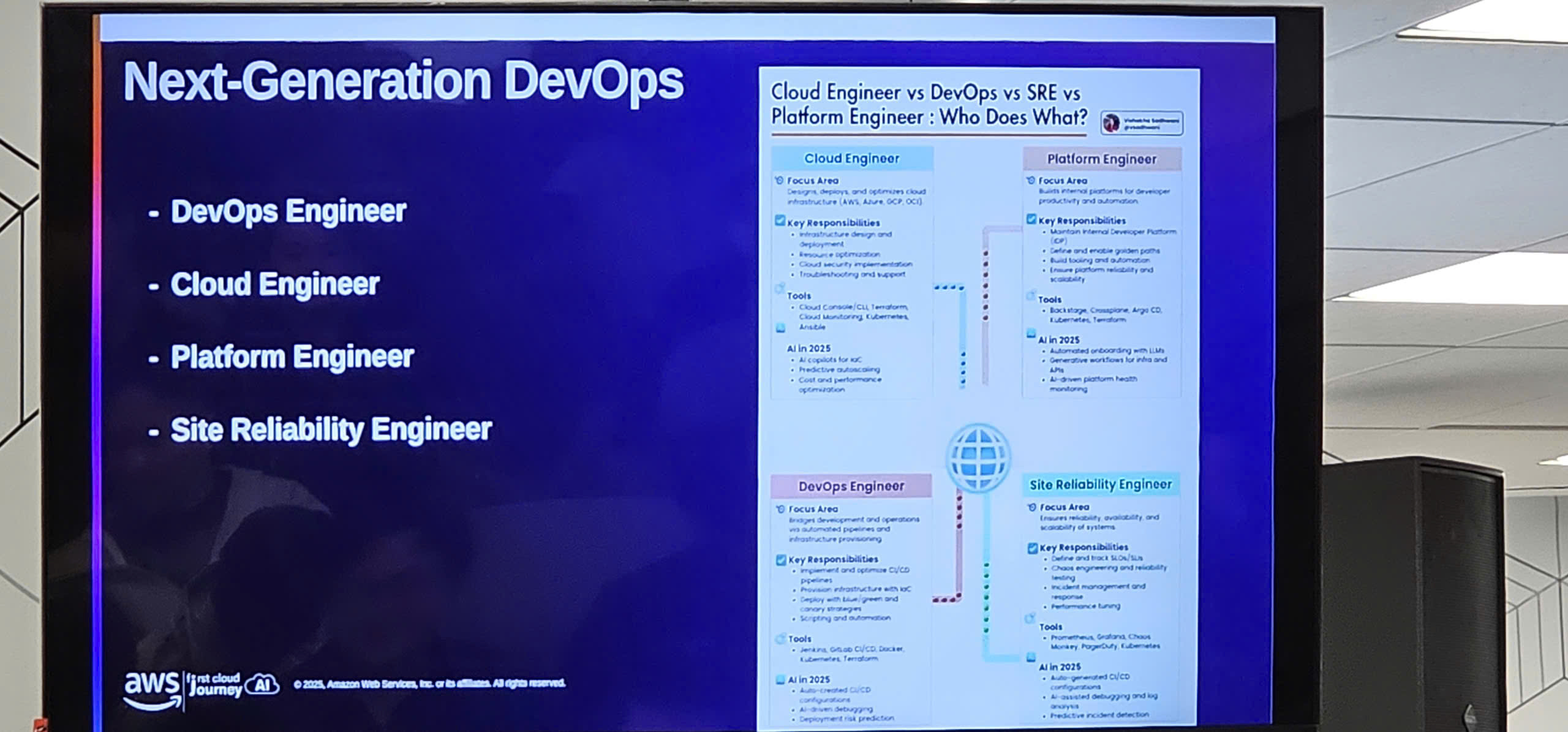
- Truong Quang Tinh – AWS Community Builder – DevOps Culture and CI/CD Fundamentals
- Van Hoang Kha – AWS Community Builder – Infrastructure as Code with CloudFormation
- Nguyen Khanh Phuc Thinh – AWS Community Builder – AWS CDK Deep Dive
- Le Huynh Nghiem – AWS Community Builder – Container Services on AWS
- Huynh Hoang Long – AWS Community Builder – Monitoring and Observability
- Pham Hoang Quy – AWS Community Builder – DevOps Best Practices and Case Studies
Facilitators:
- AWS Vietnam Team
- AWS Community Builders Vietnam
Event Agenda
8:30 AM - 9:00 AM: Registration and Welcome
- Registration and networking
- Welcome remarks and workshop overview
- Introduction to AWS DevOps services
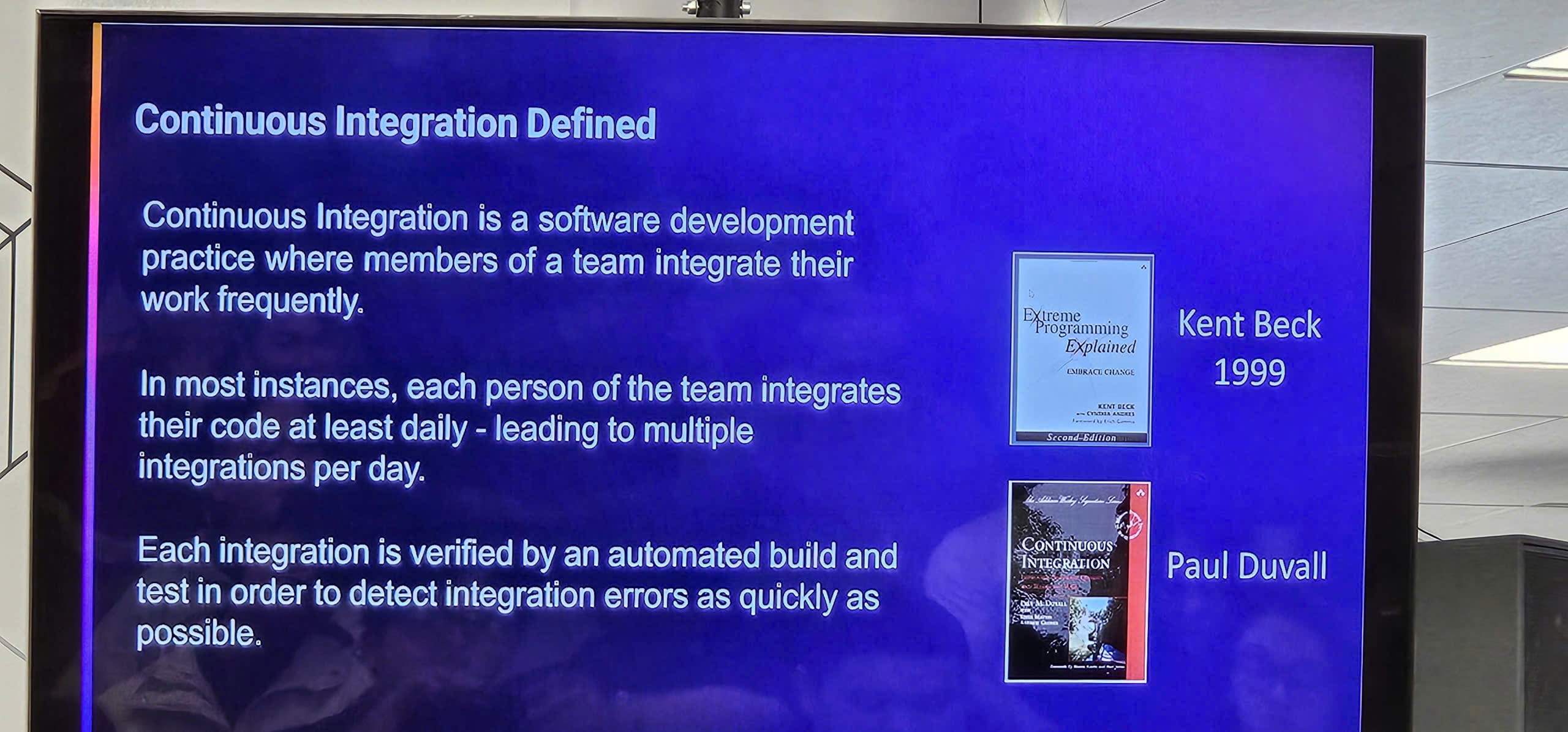
9:00 AM - 10:30 AM: DevOps Culture and CI/CD Pipeline
Presented by Truong Quang Tinh
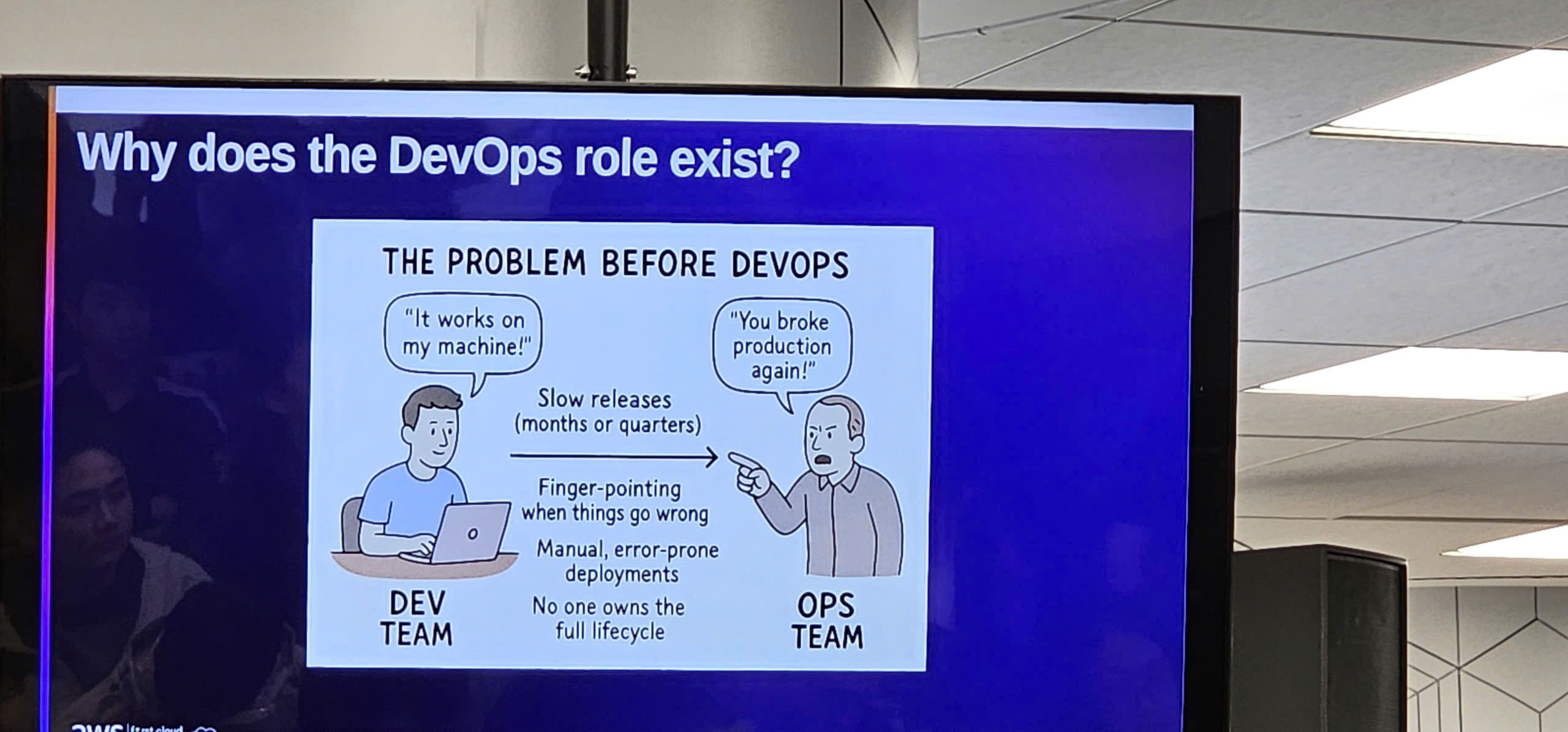
- DevOps Mindset: Understanding the cultural shift from traditional development to DevOps
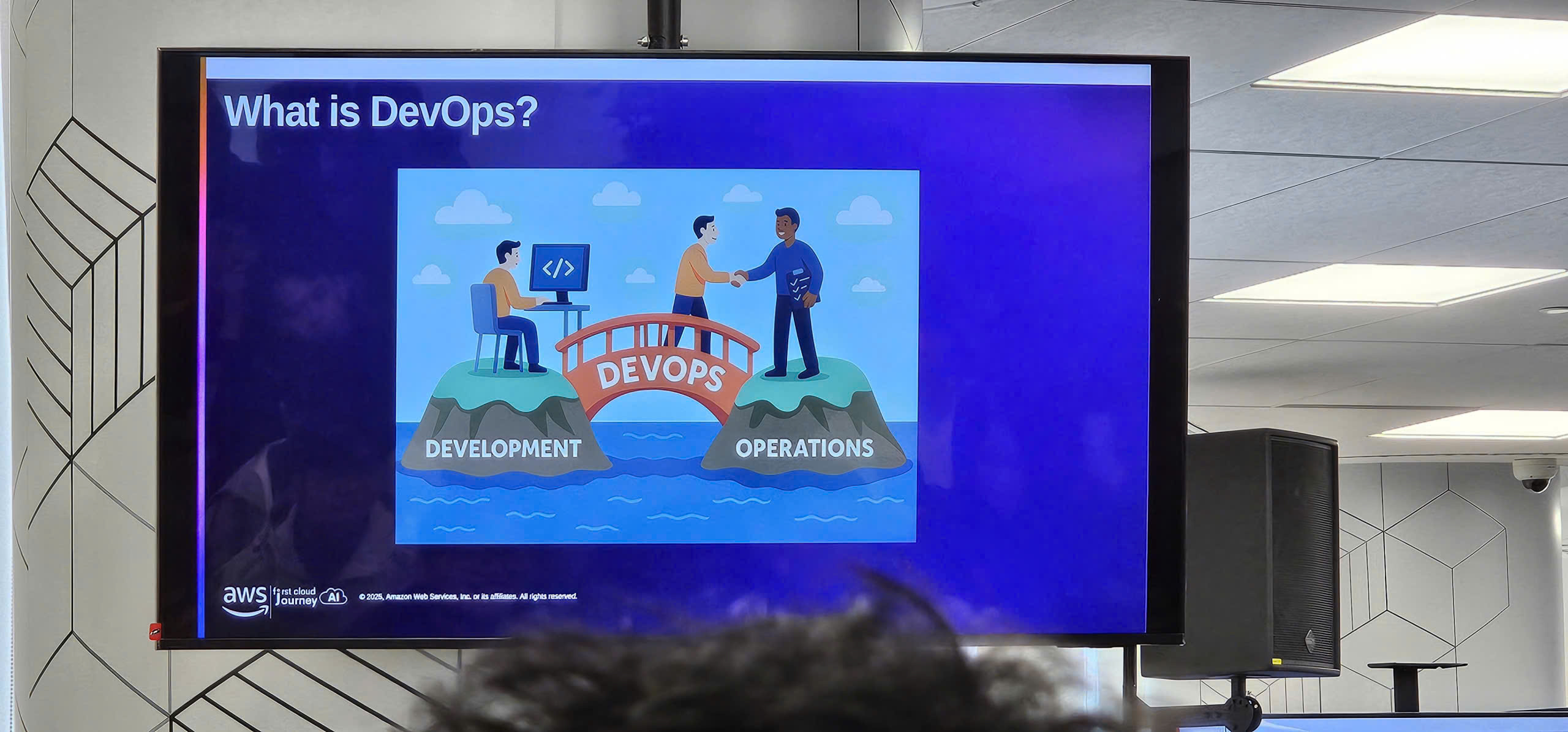
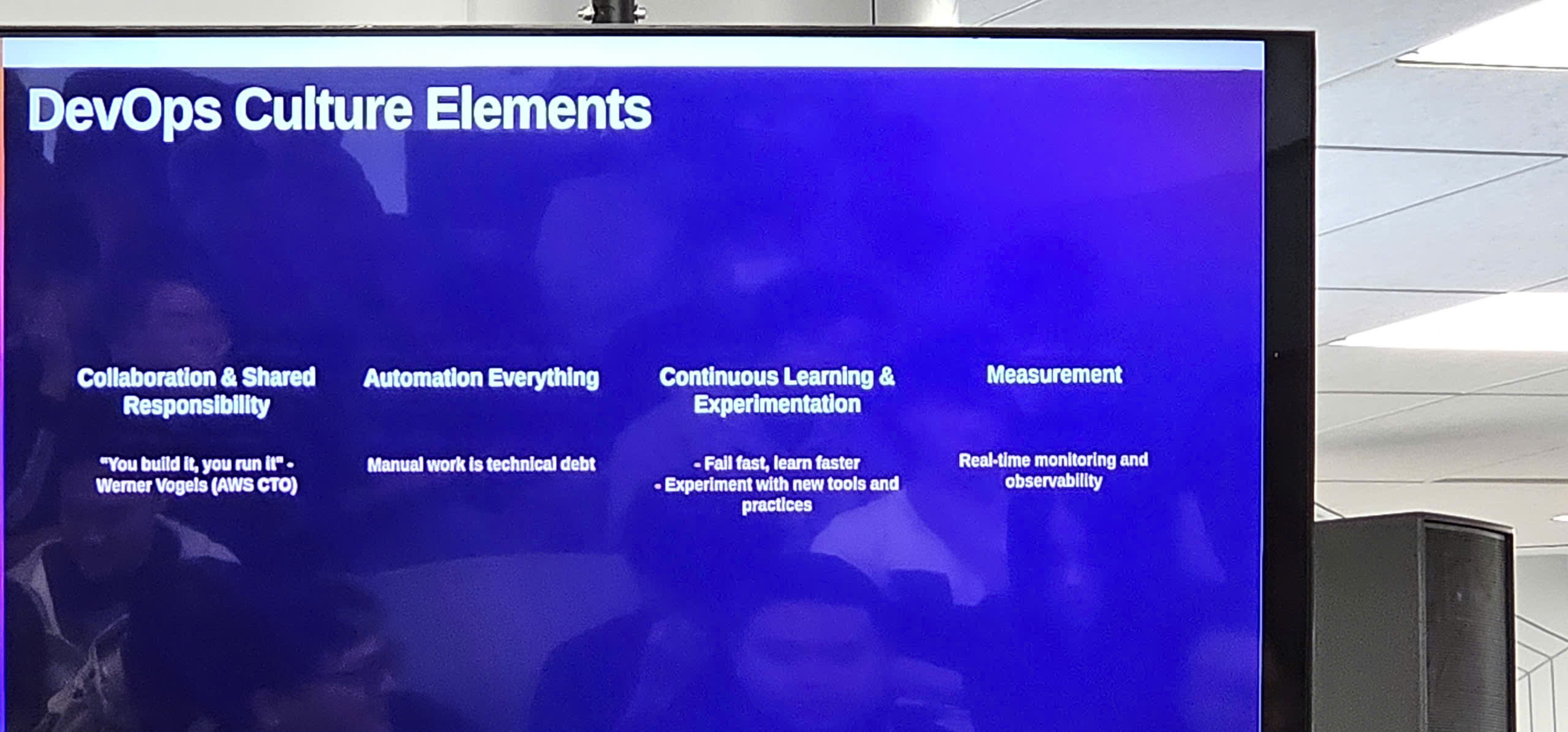
- Collaboration: Breaking down silos between Development and Operations teams
- Automation: Automating repetitive tasks to increase efficiency
- Continuous Improvement: Embracing feedback loops and iterative development
- Shared Responsibility: Everyone owns quality, security, and reliability
- DORA Metrics: Measuring DevOps success with industry-standard metrics
- Deployment Frequency: How often code is deployed to production
- Lead Time for Changes: Time from commit to production deployment
- Mean Time to Recovery (MTTR): How quickly systems recover from failures
- Change Failure Rate: Percentage of deployments causing production issues
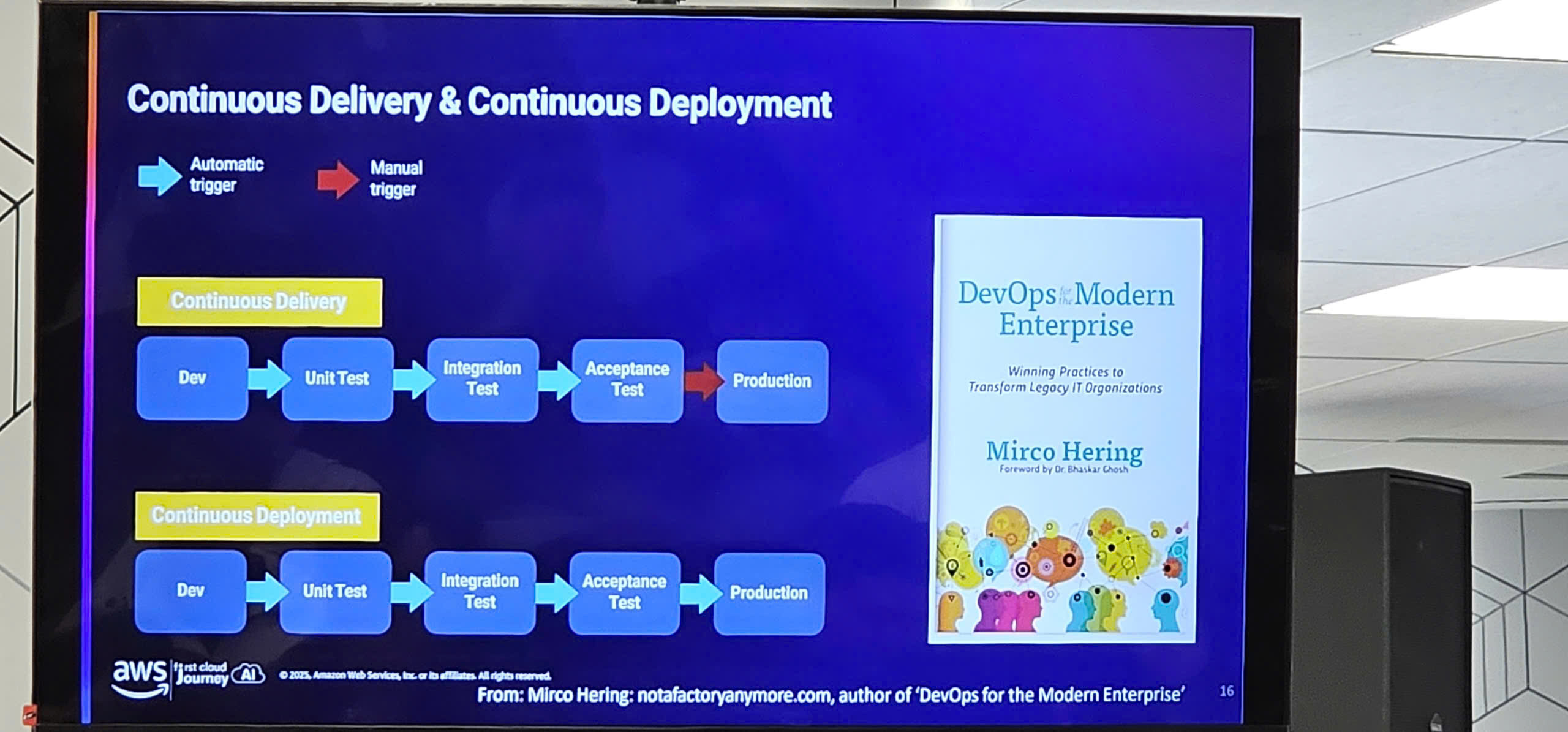
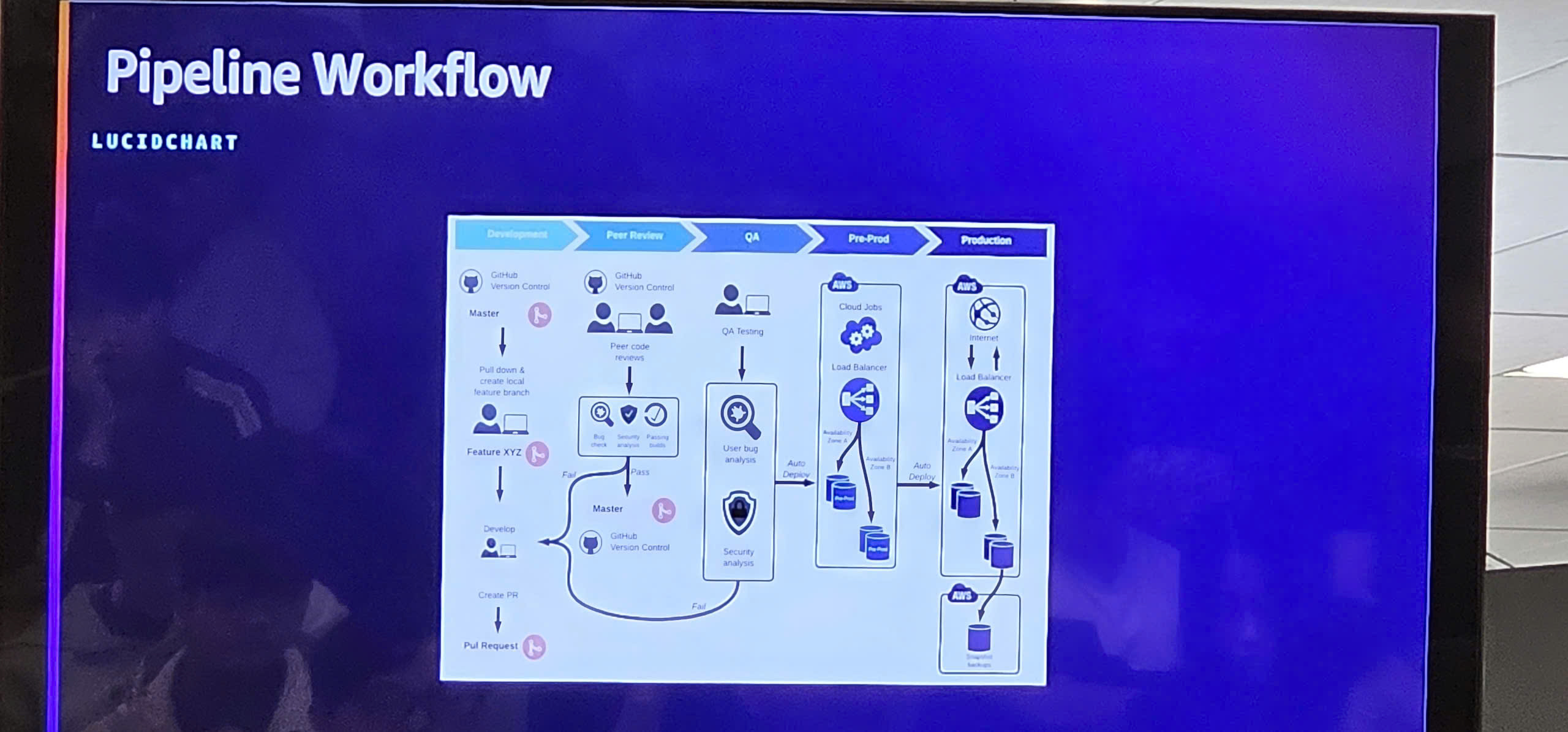
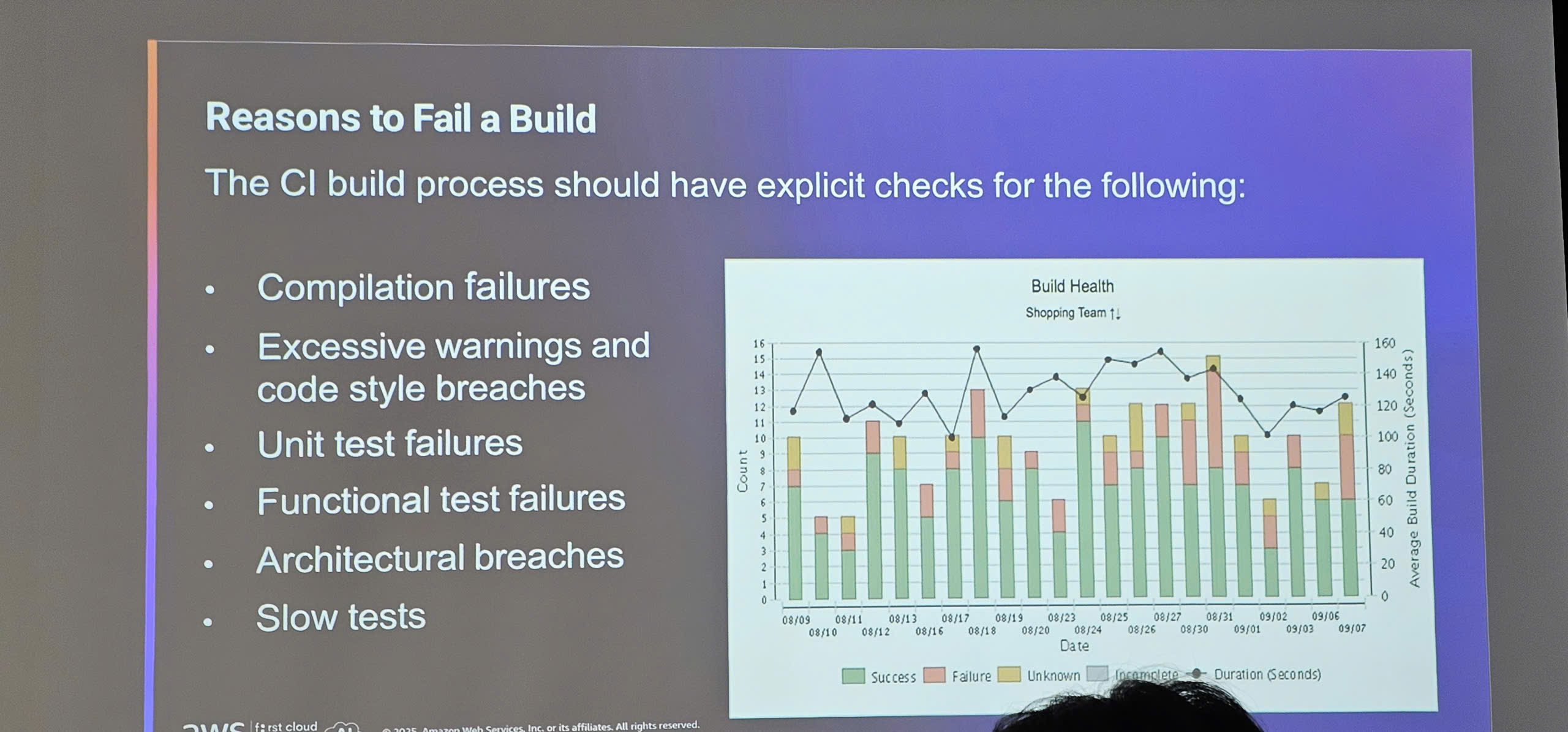
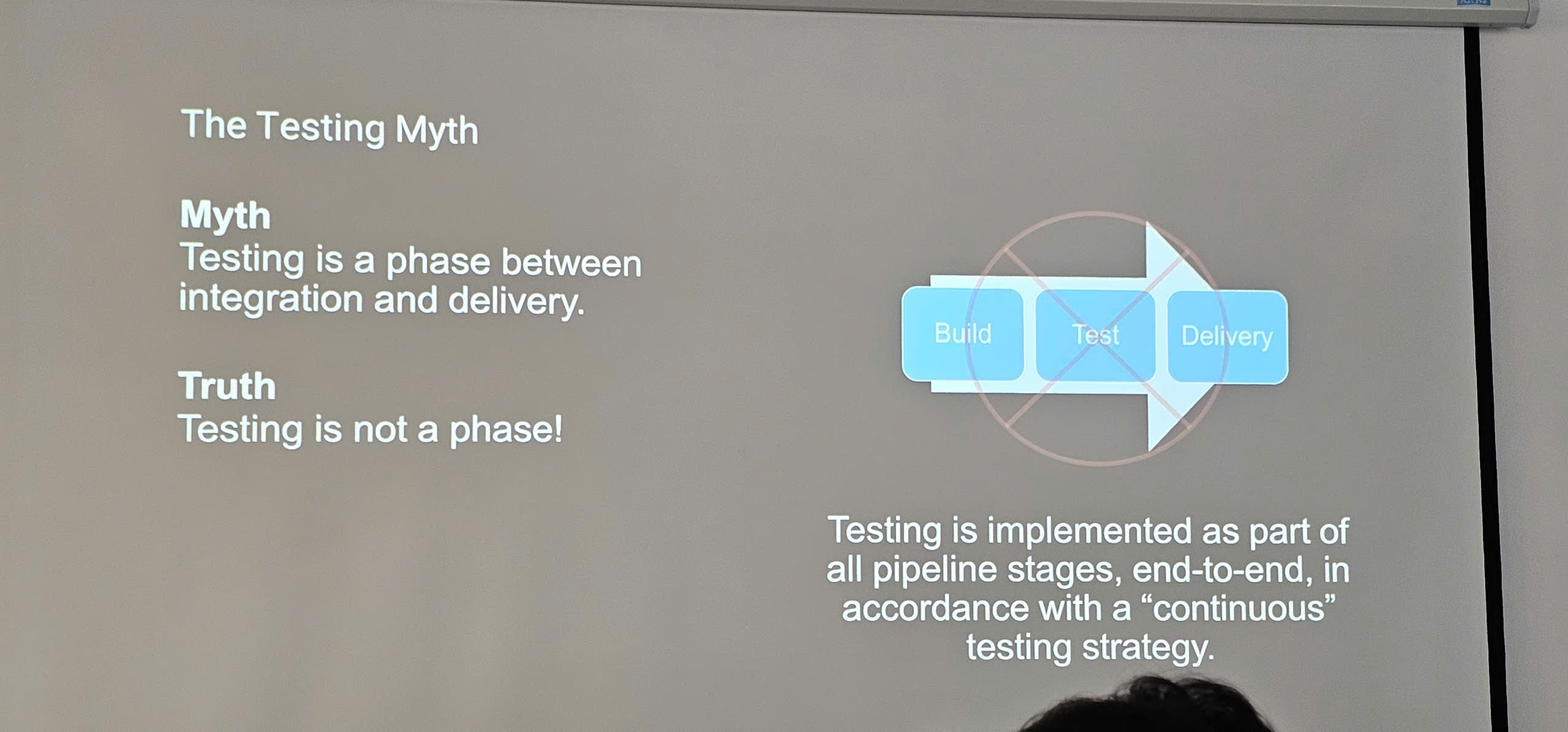
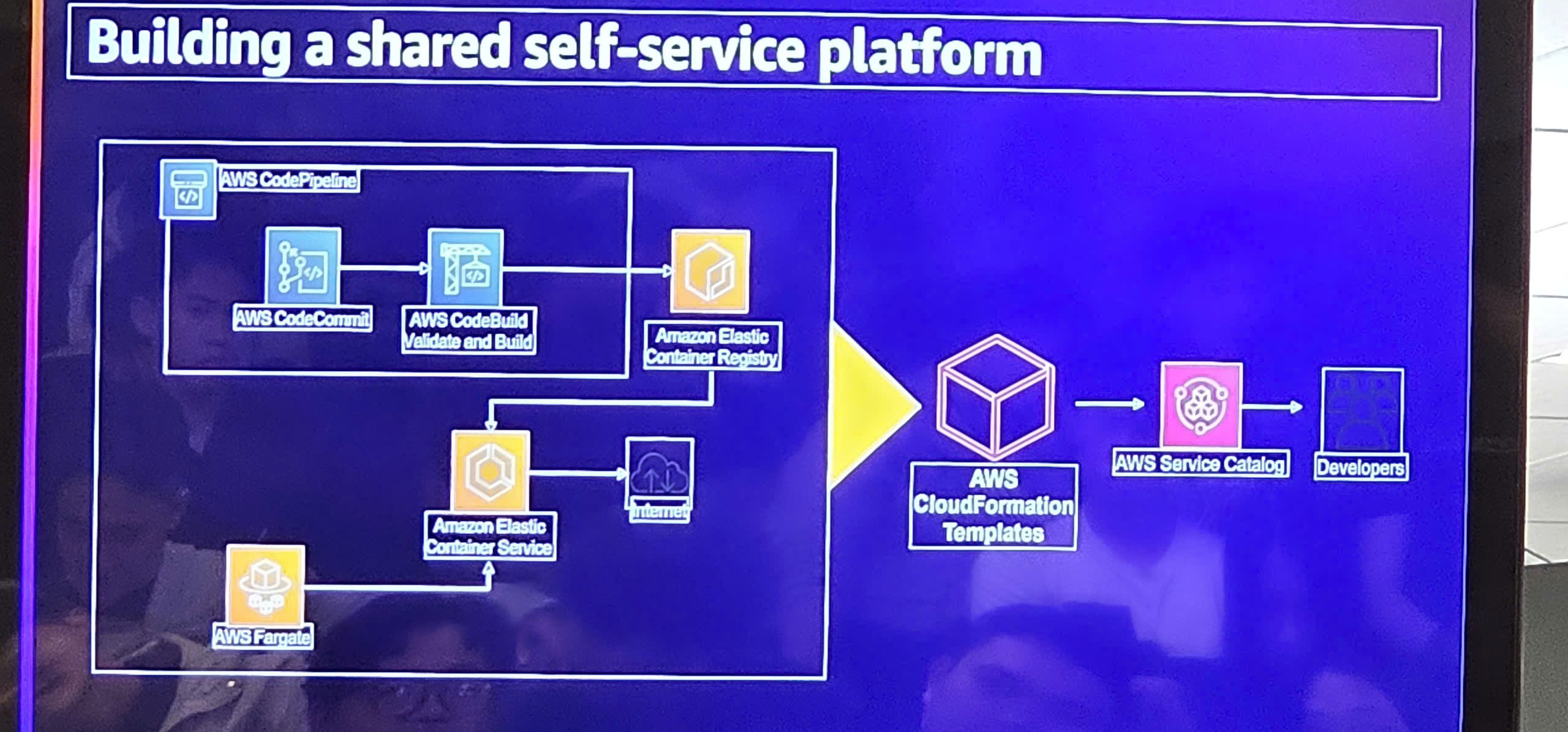
- CI/CD Pipeline Components:
- AWS CodeCommit: Secure, scalable Git repository hosting
- AWS CodeBuild: Fully managed build service that compiles code and runs tests
- AWS CodeDeploy: Automated deployment to EC2, Lambda, ECS, and on-premises servers
- AWS CodePipeline: Orchestration service that automates the entire release process
- Deployment Strategies:
- Blue/Green Deployment: Minimize downtime by switching traffic between environments
- Canary Deployment: Gradually roll out changes to a subset of users
- Rolling Deployment: Update instances incrementally to maintain availability
- Live Demo: Building a complete CI/CD pipeline from scratch
10:30 AM - 10:45 AM: Coffee Break
- Networking and refreshments
10:45 AM - 12:00 PM: Infrastructure as Code with CloudFormation
Presented by Van Hoang Kha
- Infrastructure as Code (IaC) Principles:
- Version Control: Track infrastructure changes like application code
- Repeatability: Deploy identical environments consistently
- Documentation: Infrastructure code serves as living documentation
- Testing: Validate infrastructure before deployment
- AWS CloudFormation Fundamentals:
- Templates: JSON or YAML files defining AWS resources
- Stacks: Collections of AWS resources managed as a single unit
- Change Sets: Preview changes before applying them
- Drift Detection: Identify manual changes to stack resources
- CloudFormation Best Practices:
- Modular Templates: Use nested stacks for reusability
- Parameters: Make templates flexible with input parameters
- Outputs: Export values for use in other stacks
- Cross-Stack References: Share resources between stacks
- Advanced Features:
- Stack Policies: Protect critical resources from updates
- Rollback Triggers: Automatically rollback on CloudWatch alarms
- StackSets: Deploy stacks across multiple accounts and regions
- Live Demo: Deploying a multi-tier application with CloudFormation
12:00 PM - 1:00 PM: Lunch Break
- Lunch and networking
1:00 PM - 2:15 PM: AWS CDK Deep Dive
Presented by Nguyen Khanh Phuc Thinh
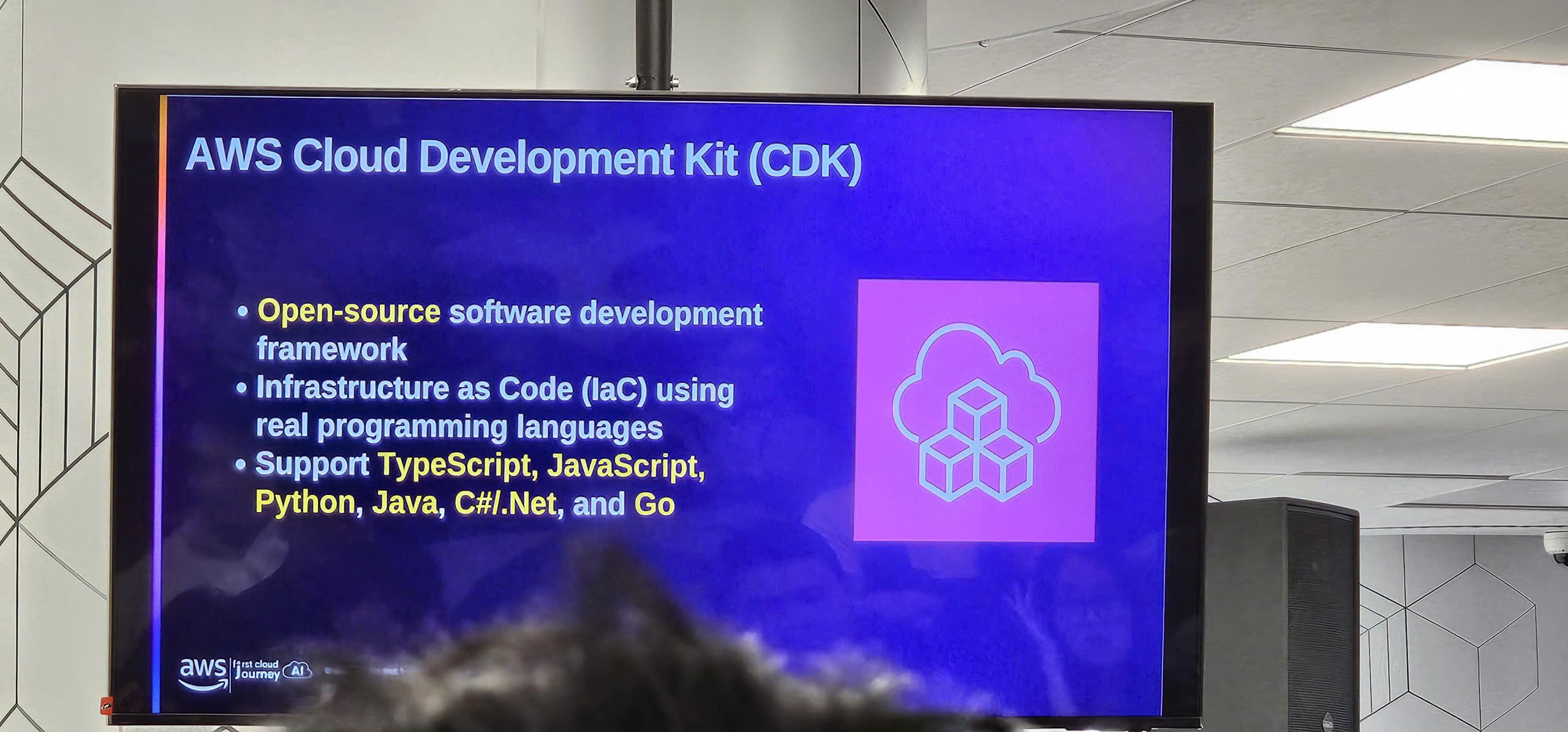
- Introduction to AWS CDK:
- What is CDK: Cloud Development Kit for defining infrastructure in code
- Benefits: Use familiar programming languages (TypeScript, Python, Java, C#, Go)
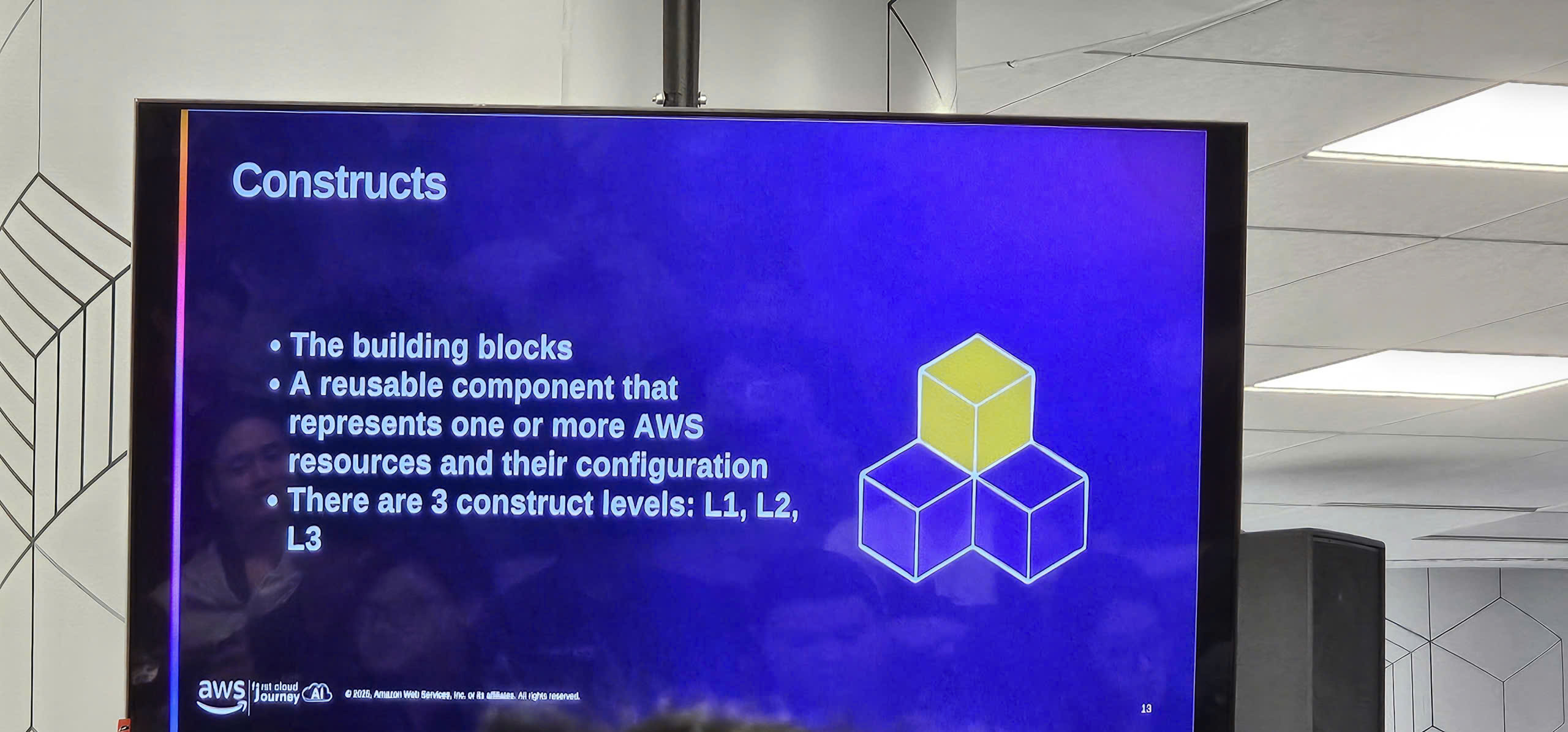
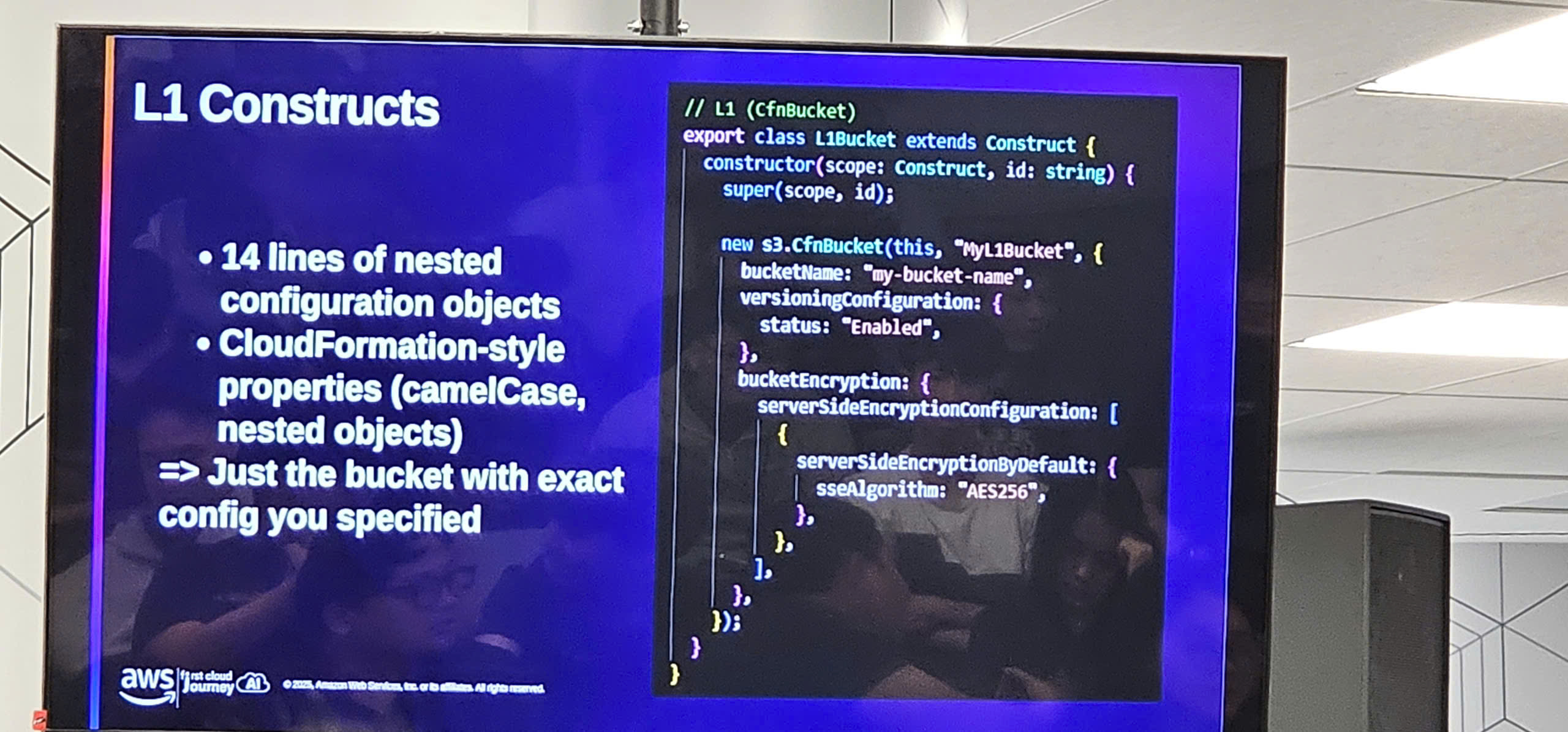
- Abstraction Levels: L1 (CloudFormation resources), L2 (curated constructs), L3 (patterns)
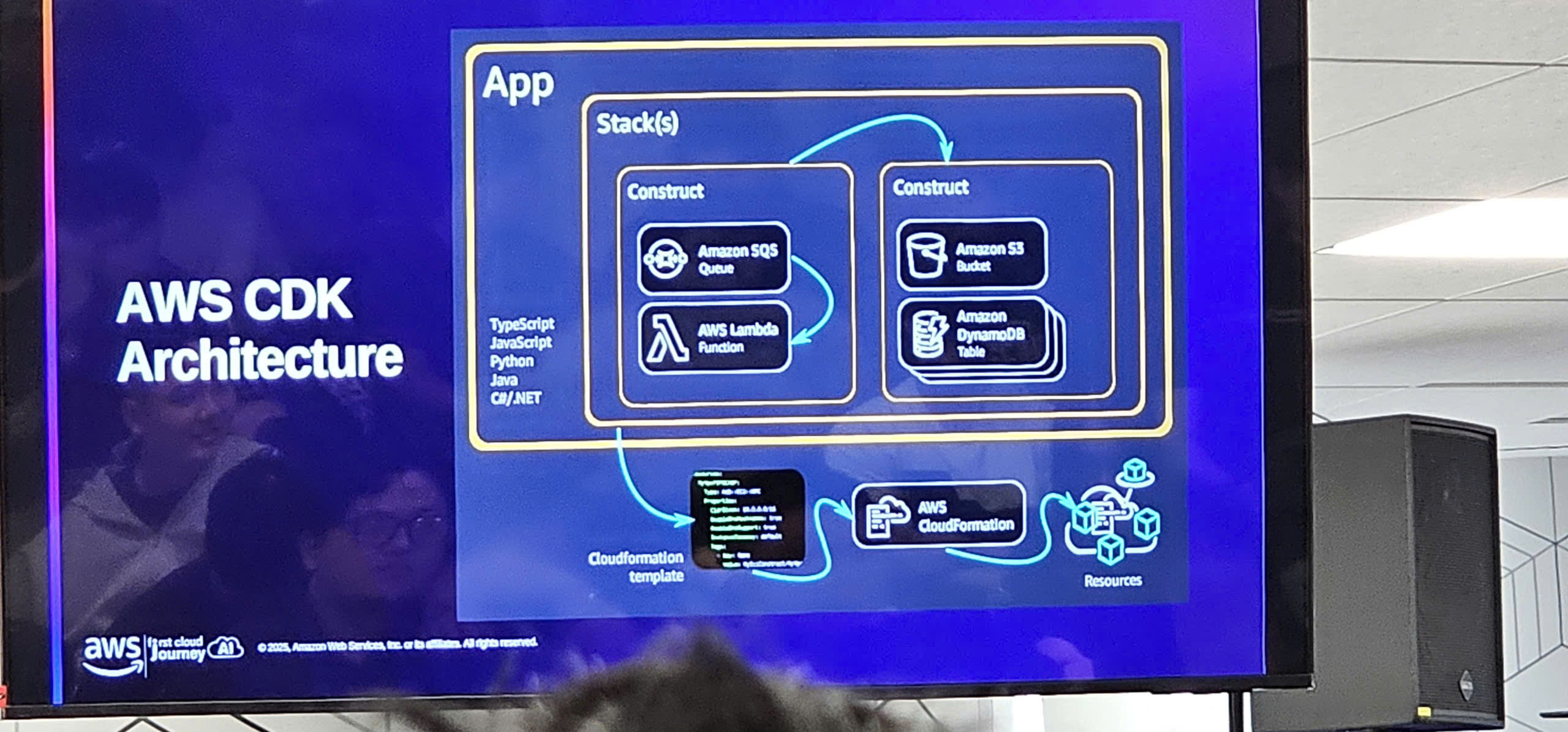
- CDK Core Concepts:
- Constructs: Reusable cloud components
- Stacks: Deployment units containing constructs
- Apps: Collections of stacks
- Synthesis: Converting CDK code to CloudFormation templates
- CDK vs CloudFormation:
- Programmatic: Use loops, conditionals, and functions
- Type Safety: Catch errors at compile time
- IDE Support: Autocomplete and inline documentation
- Testing: Unit test infrastructure code
- CDK Best Practices:
- Construct Libraries: Leverage pre-built patterns
- Environment Agnostic: Write code that works across environments
- Logical IDs: Stable identifiers for resources
- Context Values: Environment-specific configuration
- Live Demo: Building a serverless application with CDK
2:15 PM - 2:30 PM: Coffee Break
- Networking and refreshments
2:30 PM - 3:45 PM: Container Services on AWS
Presented by Le Huynh Nghiem
- Container Fundamentals:
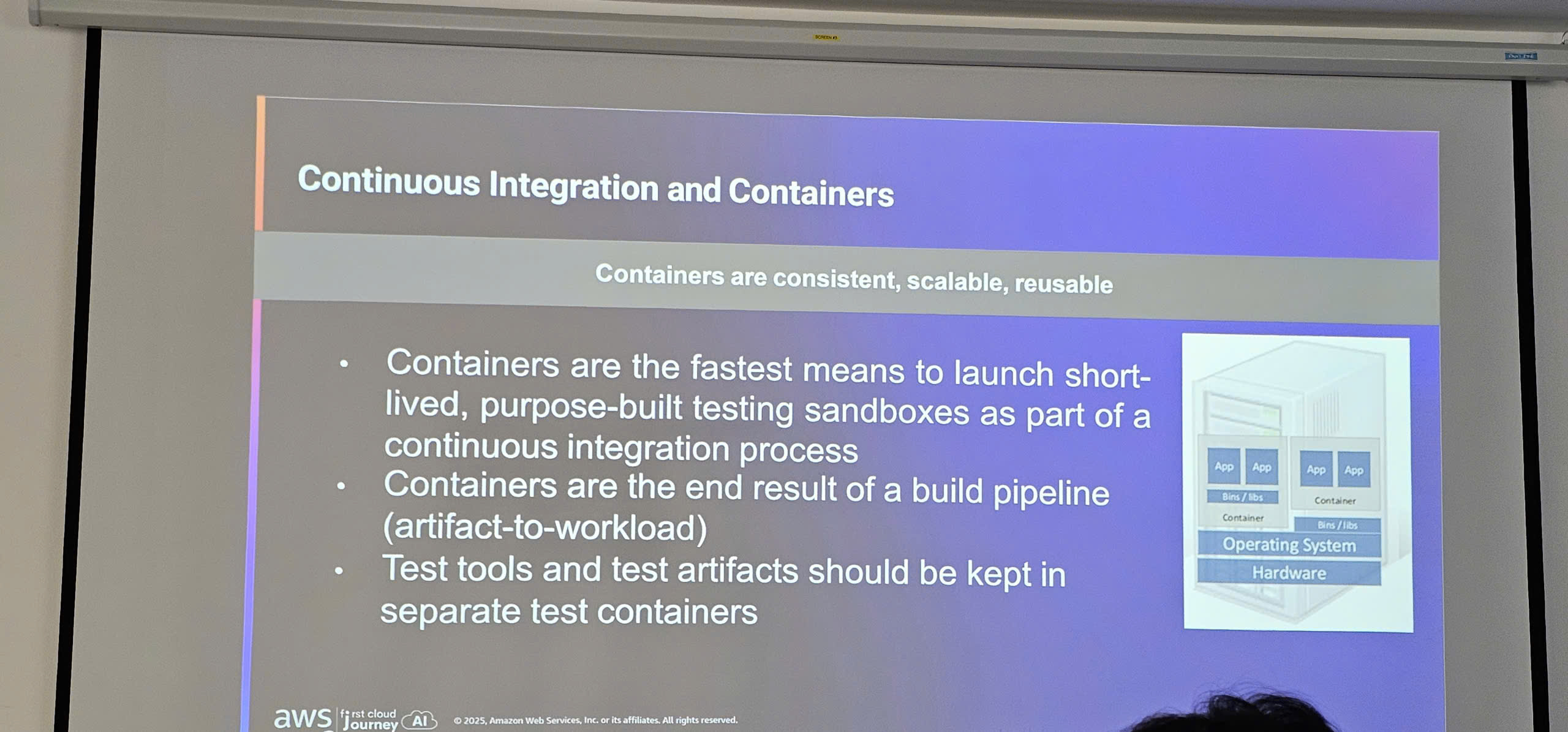
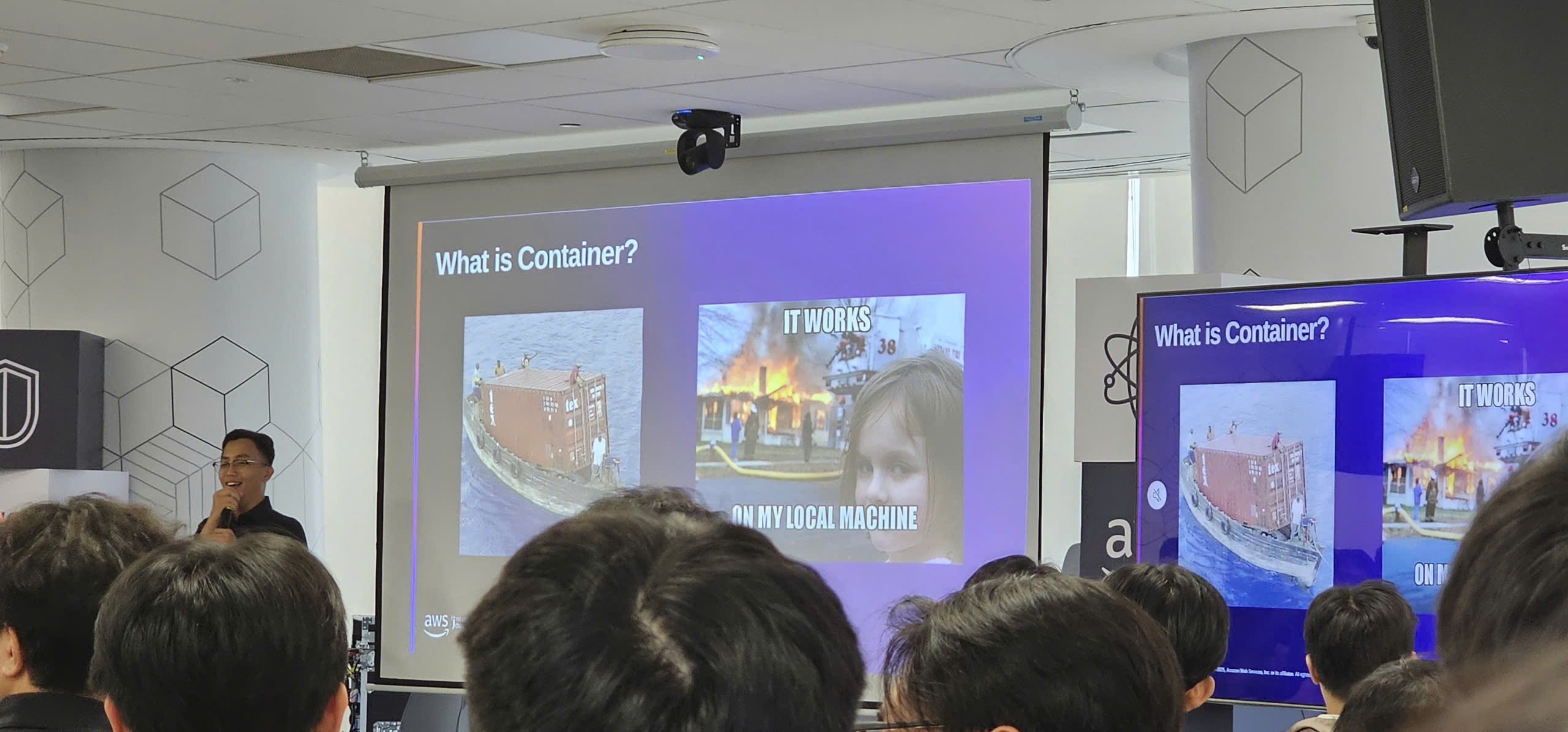
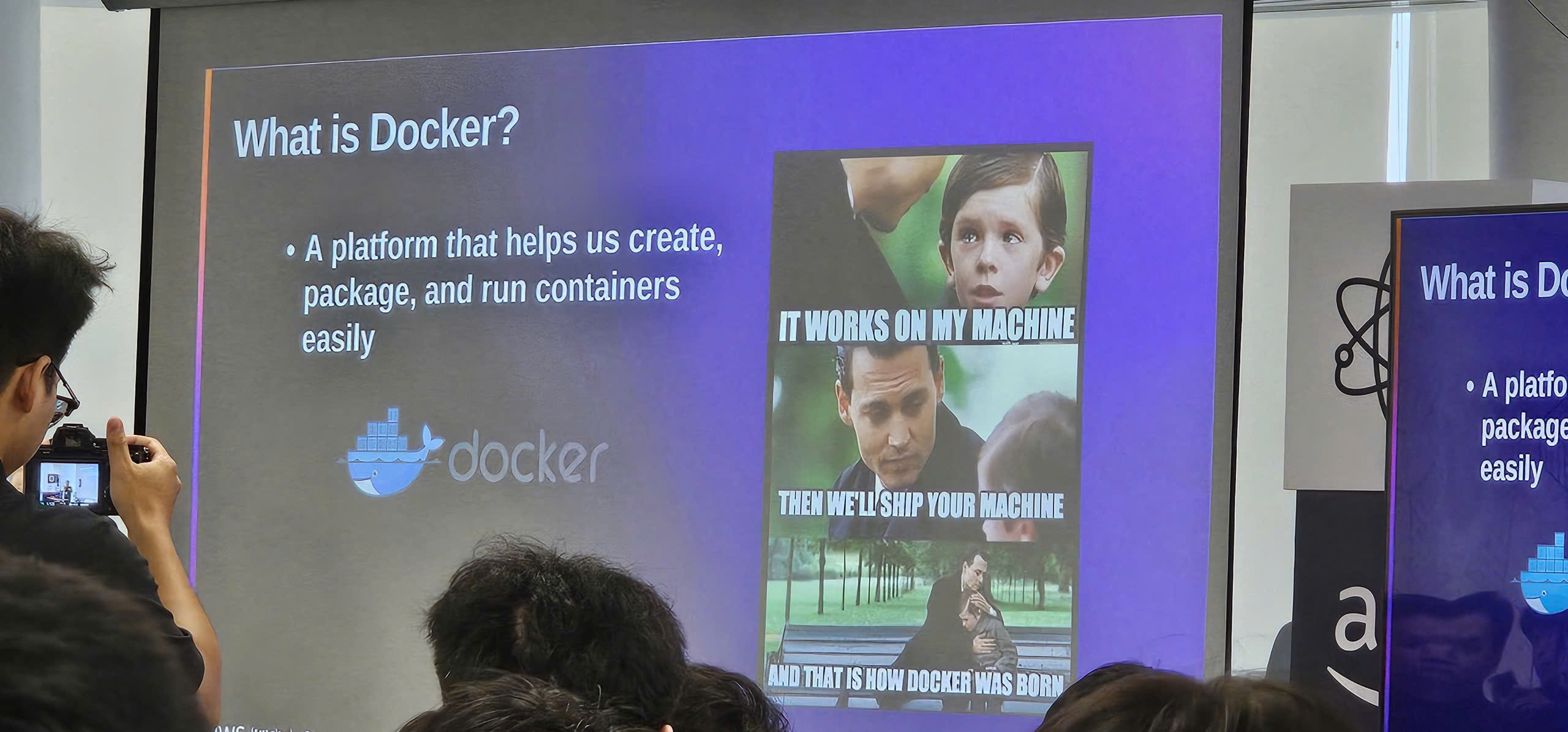
- What are Containers: Lightweight, portable application packages
- Benefits: Consistency, portability, efficiency, scalability
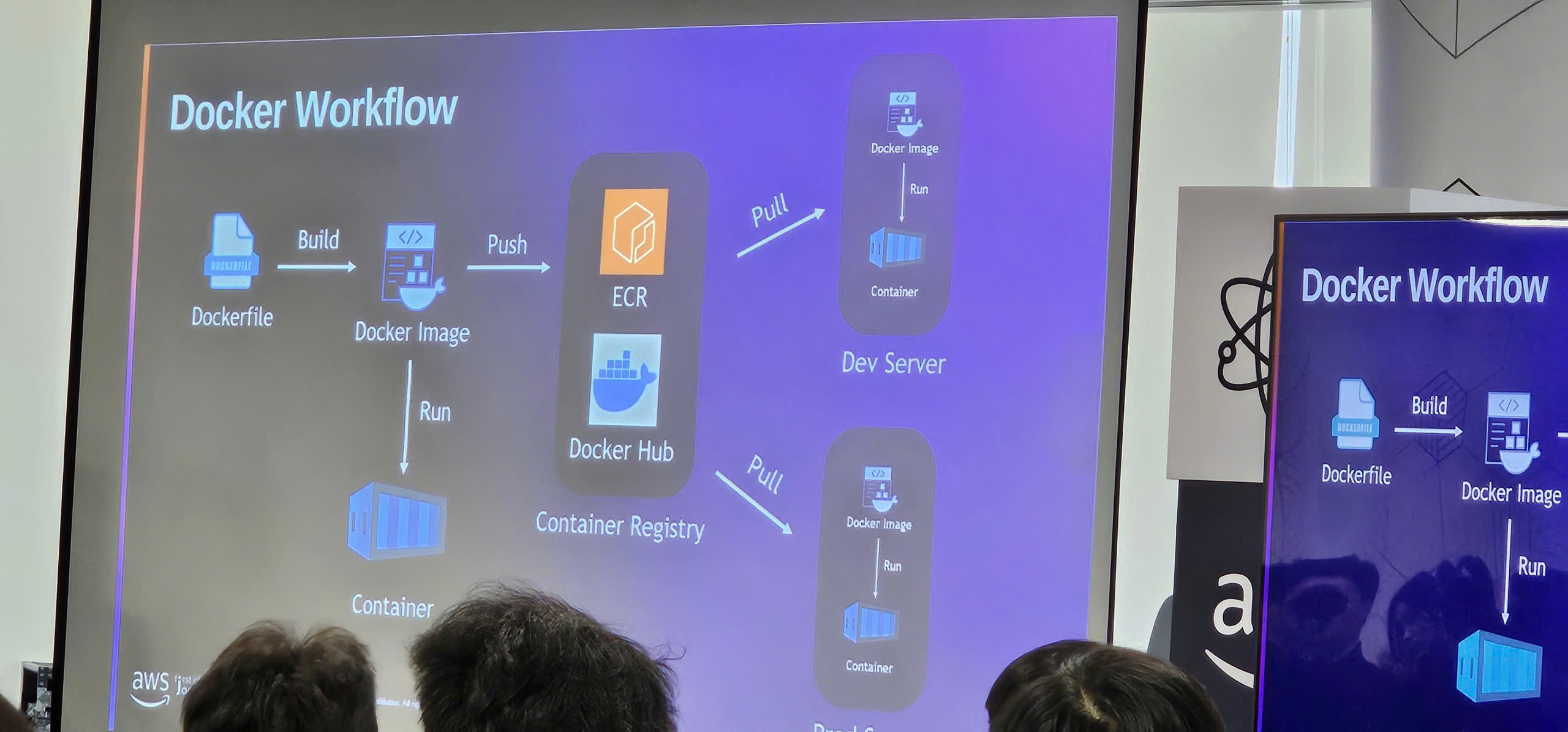
- Docker Basics: Images, containers, registries
- Amazon Elastic Container Registry (ECR):
- Private Registry: Secure storage for container images
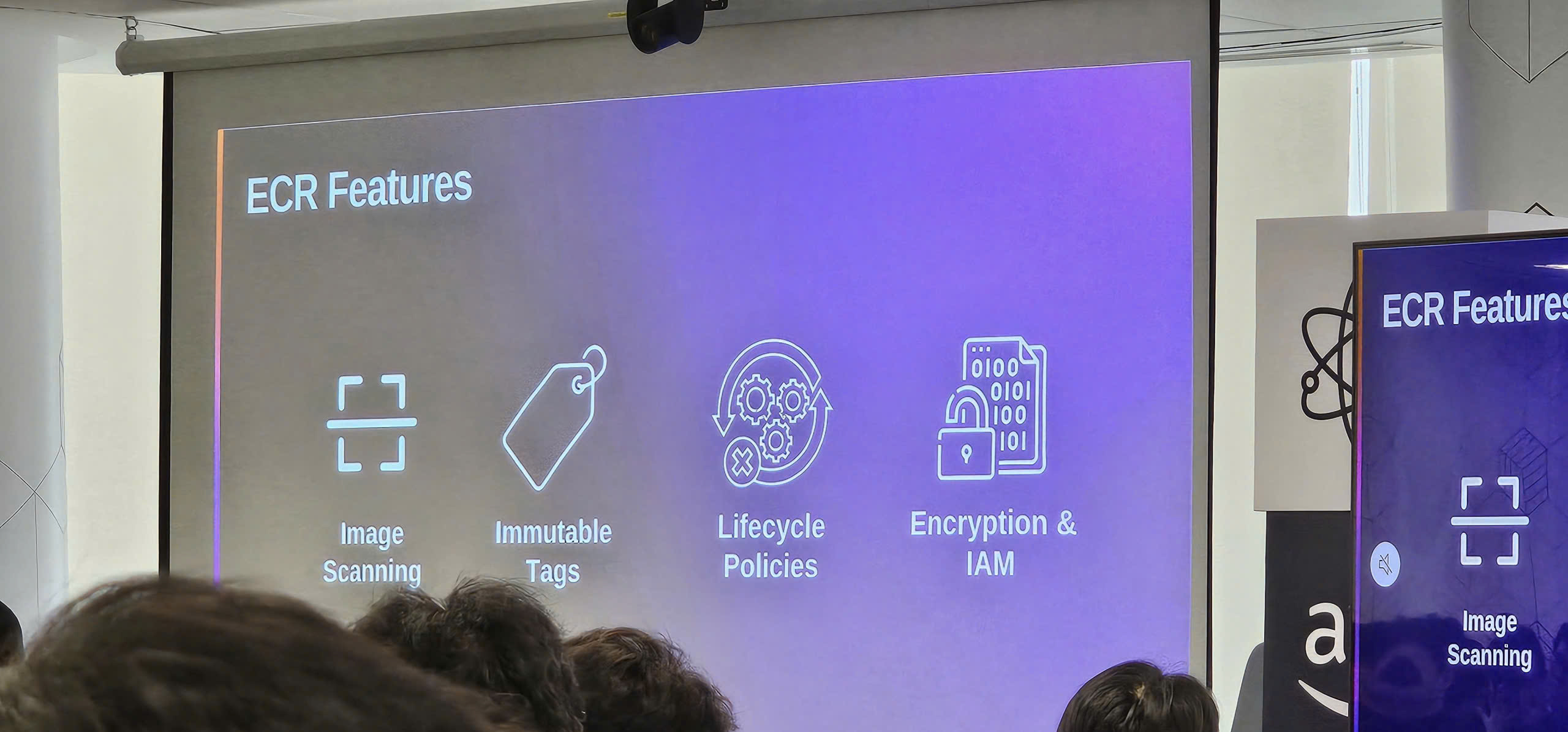
- Image Scanning: Automated vulnerability detection
- Lifecycle Policies: Automatically clean up old images
- Cross-Region Replication: Distribute images globally
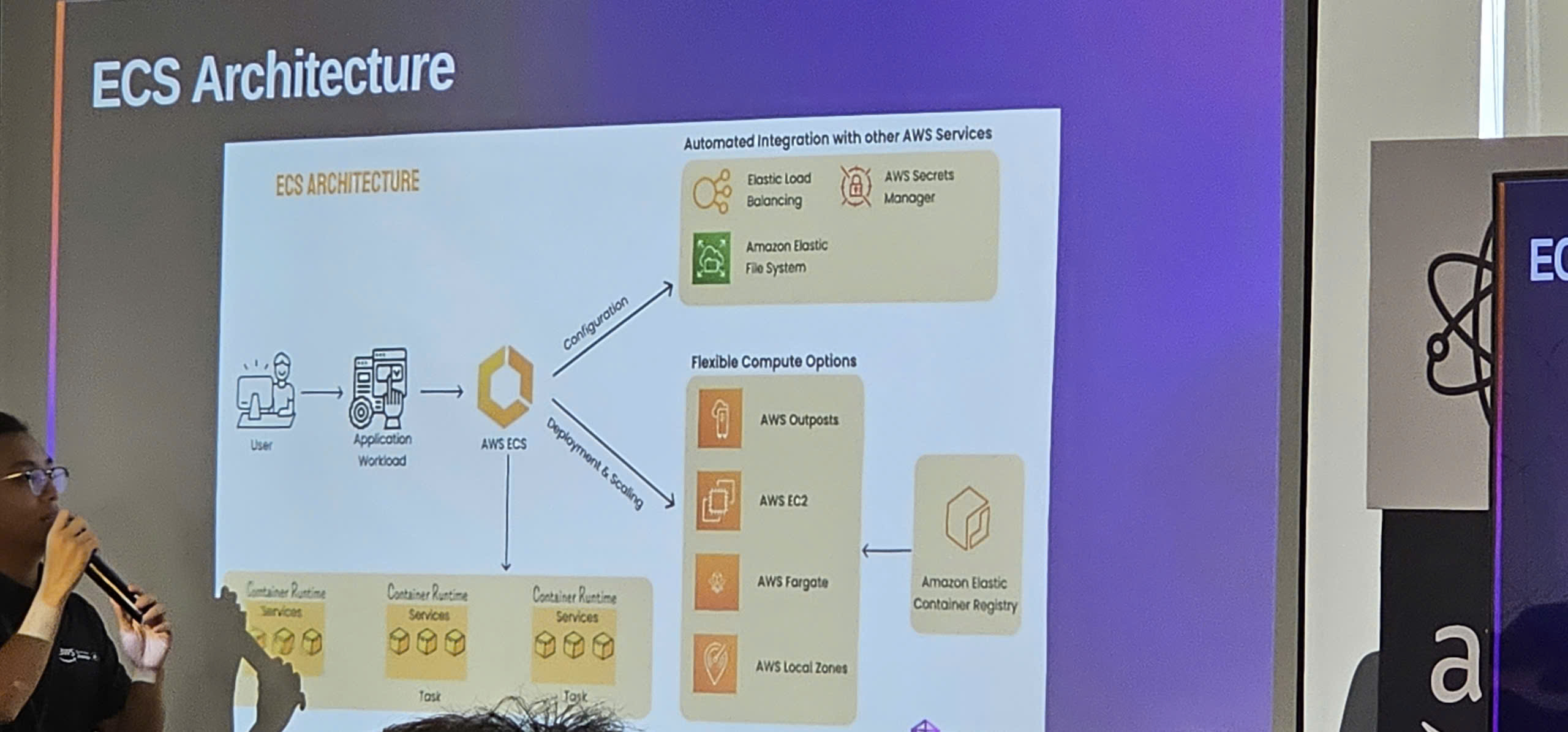
- Amazon Elastic Container Service (ECS):
- AWS-Native Orchestration: Simple, integrated container management
- Task Definitions: Blueprint for running containers
- Services: Maintain desired number of tasks
- Fargate: Serverless compute for containers
- EC2 Launch Type: More control over infrastructure
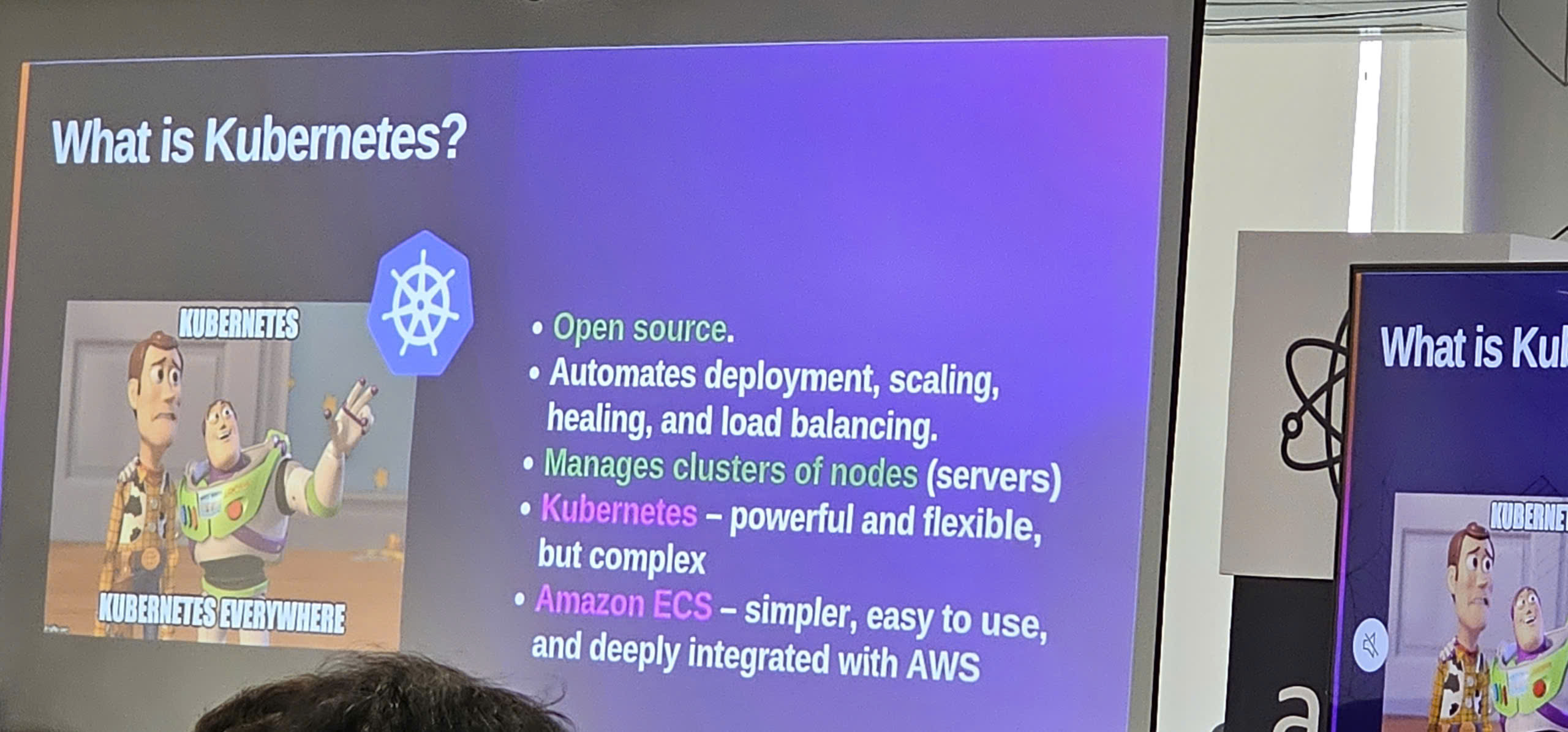
- Amazon Elastic Kubernetes Service (EKS):
- Managed Kubernetes: Run Kubernetes without managing control plane
- Compatibility: Standard Kubernetes APIs and tools
- Flexibility: Support for complex orchestration needs
- Add-ons: Integrated AWS services (ALB, EBS, EFS)
- AWS App Runner:
- Simplest Option: From source code to running service
- Automatic Scaling: Scale based on traffic
- Built-in CI/CD: Deploy from source repository
- Use Cases: Web applications, APIs, microservices
- Choosing the Right Service:
- ECS: AWS-native, simple, integrated
- EKS: Kubernetes expertise, complex orchestration
- App Runner: Fastest time to deployment, minimal configuration
- Live Demo: Deploying a containerized application to ECS and EKS
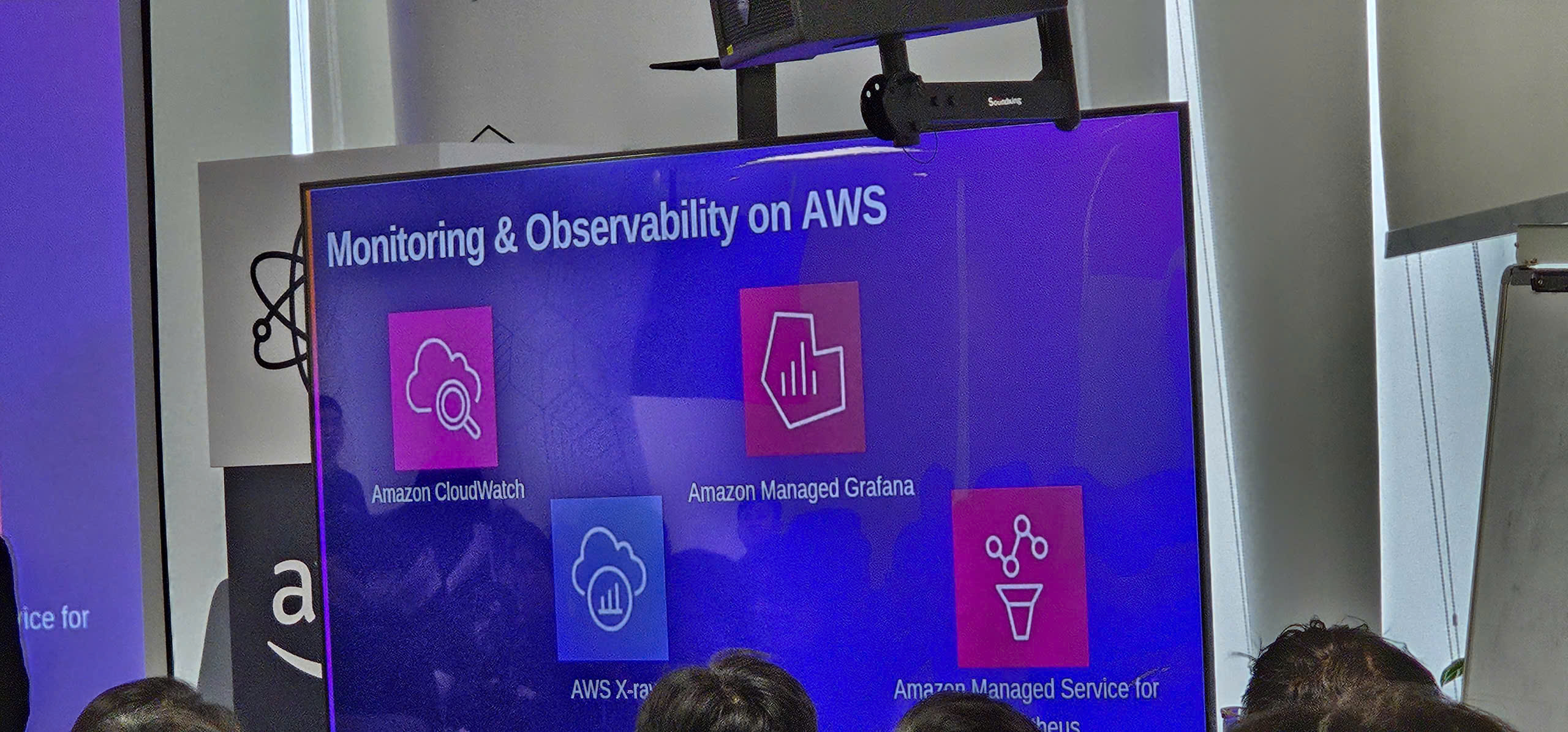
3:45 PM - 4:45 PM: Monitoring and Observability
Presented by Huynh Hoang Long
- Observability vs Monitoring:
- Monitoring: Collecting and displaying metrics
- Observability: Understanding system behavior from outputs
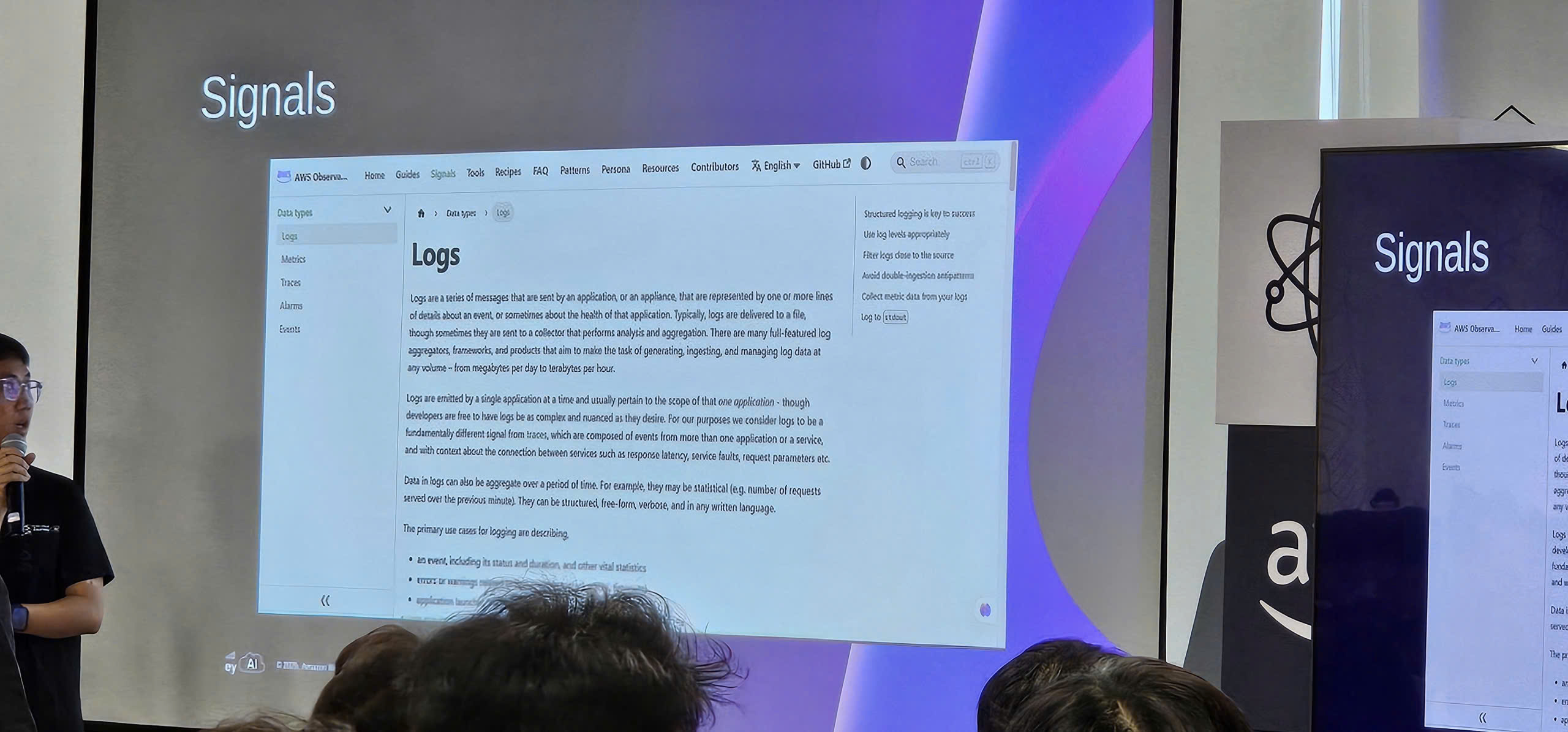
- Three Pillars: Logs, metrics, traces
- Amazon CloudWatch:
- Metrics: Collect and track key performance indicators
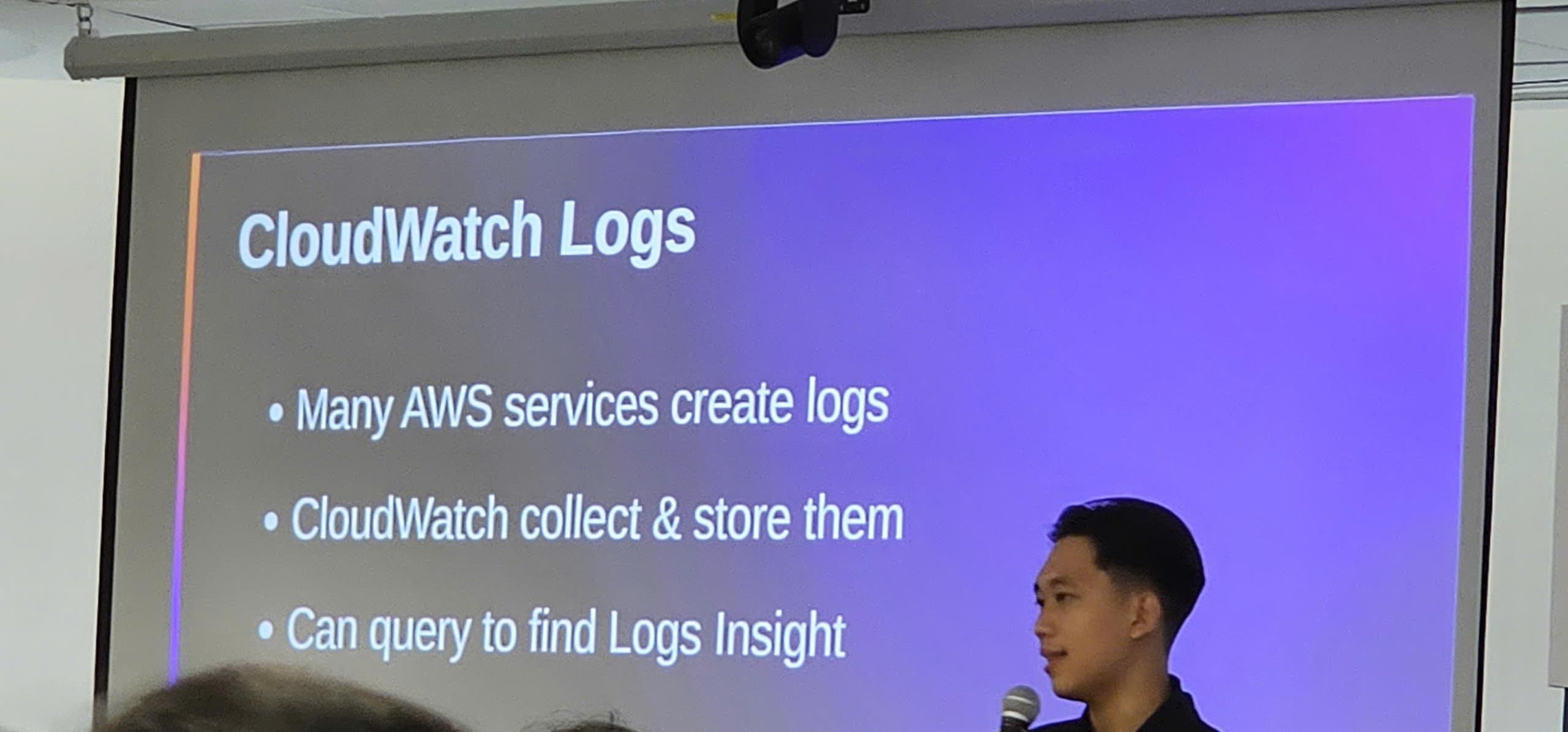
- Logs: Centralized log management and analysis
- Alarms: Automated notifications and actions
- Dashboards: Visualize metrics and logs
- Insights: Query and analyze log data
- Events: Respond to changes in AWS resources
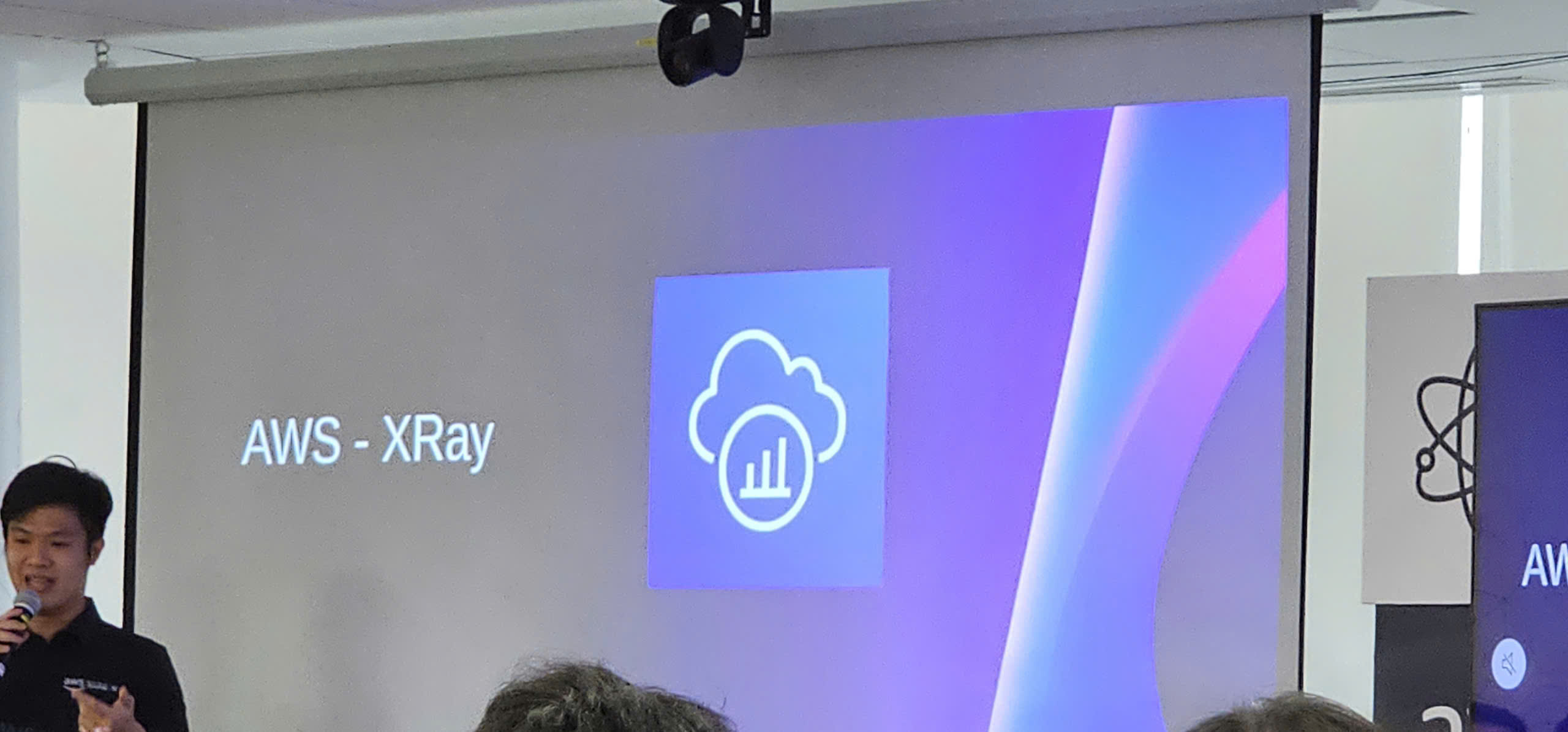
- AWS X-Ray:
- Distributed Tracing: Track requests across microservices
- Service Map: Visualize application architecture
- Trace Analysis: Identify performance bottlenecks
- Error Analysis: Debug and troubleshoot issues
- Integration: Works with Lambda, ECS, EKS, API Gateway
- Best Practices:
- Structured Logging: Use consistent log formats
- Custom Metrics: Track business-specific KPIs
- Proactive Monitoring: Set alarms before issues impact users
- Correlation: Link logs, metrics, and traces
- Retention Policies: Balance cost and compliance
- Live Demo: Setting up comprehensive monitoring for a microservices application
4:45 PM - 5:00 PM: DevOps Best Practices and Q&A
Presented by Pham Hoang Quy
- DevOps Best Practices:
- Automate Everything: From testing to deployment to monitoring
- Fail Fast, Learn Faster: Embrace failures as learning opportunities
- Blameless Postmortems: Focus on systems, not individuals
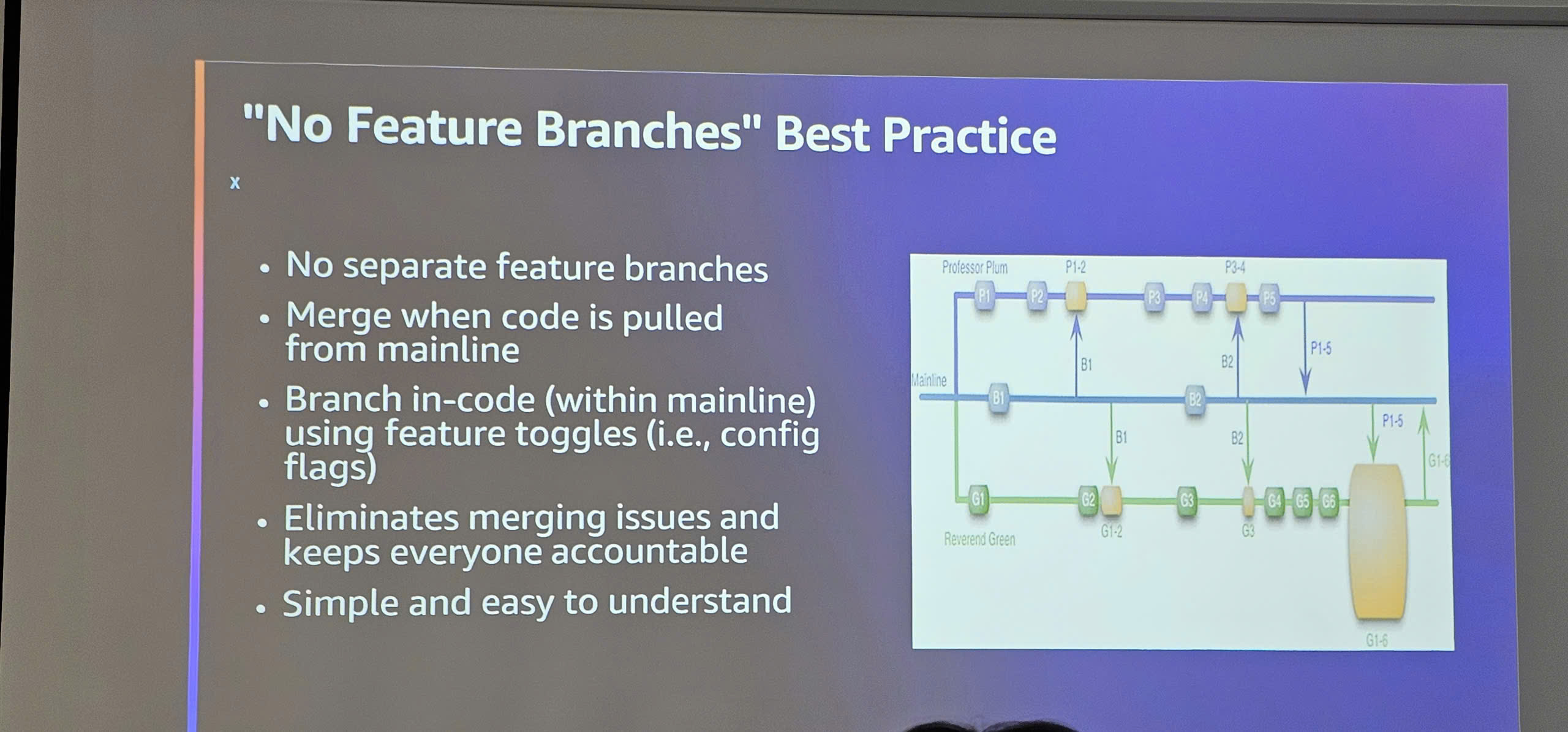
- Progressive Delivery: Use feature flags and canary deployments
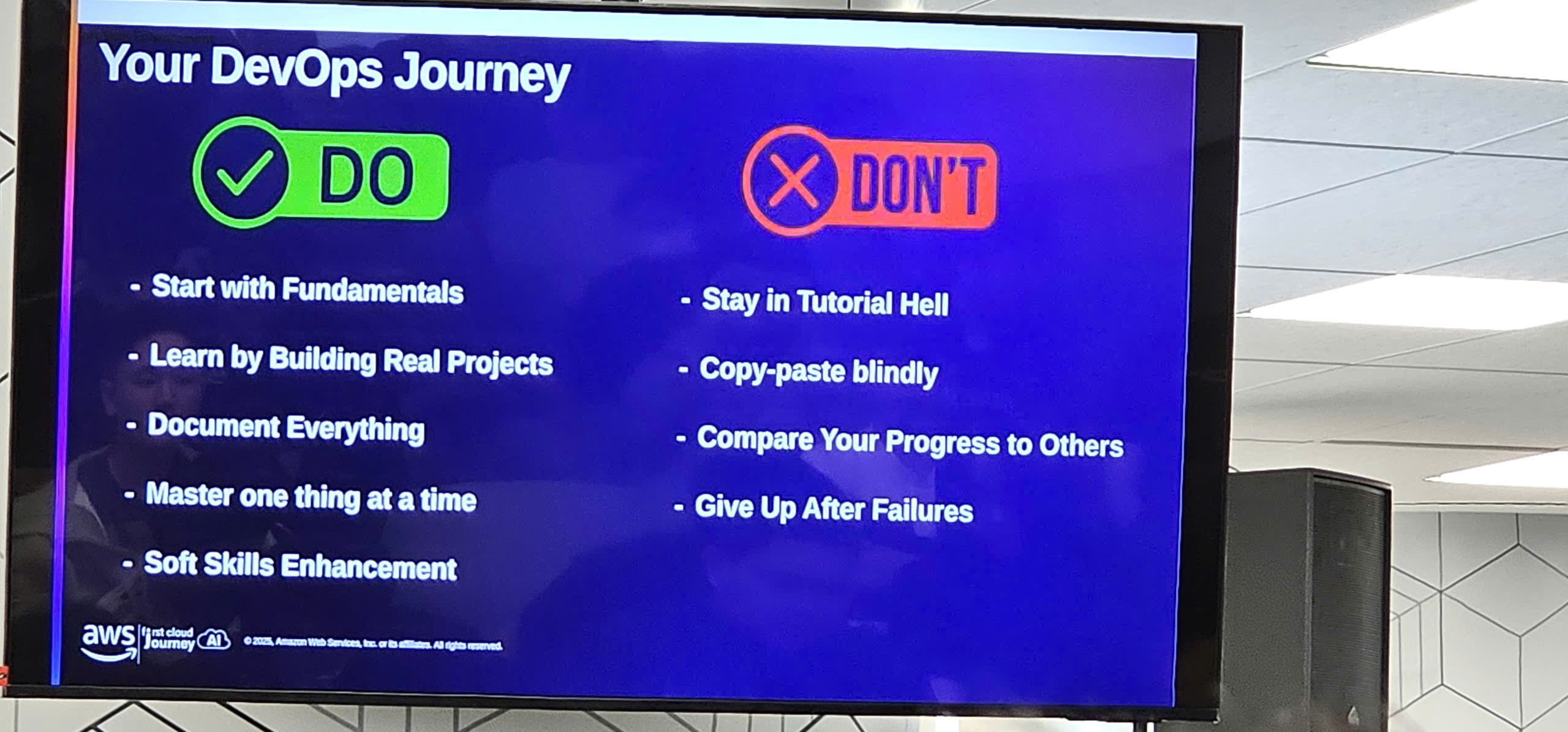
- Continuous Learning: DevOps is an ongoing journey
- Real-World Case Studies:
- Startup: Rapid iteration with CI/CD and serverless
- Enterprise: Multi-account strategy with StackSets
- E-commerce: High availability with blue/green deployments
- Q&A Session: Interactive discussion with attendees
Key Takeaways
DevOps Culture and Mindset
- Collaboration: DevOps breaks down silos between teams
- Automation: Automate repetitive tasks to focus on value
- Measurement: Use DORA metrics to track progress
- Continuous Improvement: Always iterate and optimize
- Shared Responsibility: Everyone owns quality and reliability
CI/CD Pipeline Automation
- CodeCommit: Secure Git repository for source control
- CodeBuild: Automated build and test execution
- CodeDeploy: Reliable deployment with multiple strategies
- CodePipeline: Orchestrates the entire CI/CD workflow
- Integration: Works seamlessly with AWS services and third-party tools
Infrastructure as Code
- CloudFormation: Declarative IaC with JSON/YAML templates
- CDK: Programmatic IaC with familiar programming languages
- Benefits: Version control, repeatability, and consistency
- Drift detection: Identify and remediate manual changes
- Choose wisely: Select IaC tools based on team skills and requirements
Container Services
- ECR: Secure container image storage with scanning
- ECS: AWS-native container orchestration, simple and integrated
- EKS: Kubernetes on AWS for complex orchestration needs
- App Runner: Simplest option for containerized web applications
- Right tool for the job: Choose based on complexity and requirements
Monitoring and Observability
- CloudWatch: Comprehensive monitoring for AWS resources
- X-Ray: Distributed tracing for microservices debugging
- Observability: Understanding system behavior from outputs
- Proactive monitoring: Detect issues before they impact users
- Data-driven decisions: Use metrics and traces to optimize performance
DevOps Best Practices
- Automate everything: From testing to deployment to monitoring
- Fail fast, learn faster: Embrace failures as learning opportunities
- Blameless postmortems: Focus on systems, not individuals
- Progressive delivery: Use feature flags and canary deployments
- Continuous learning: DevOps is an ongoing journey
Applying to Work
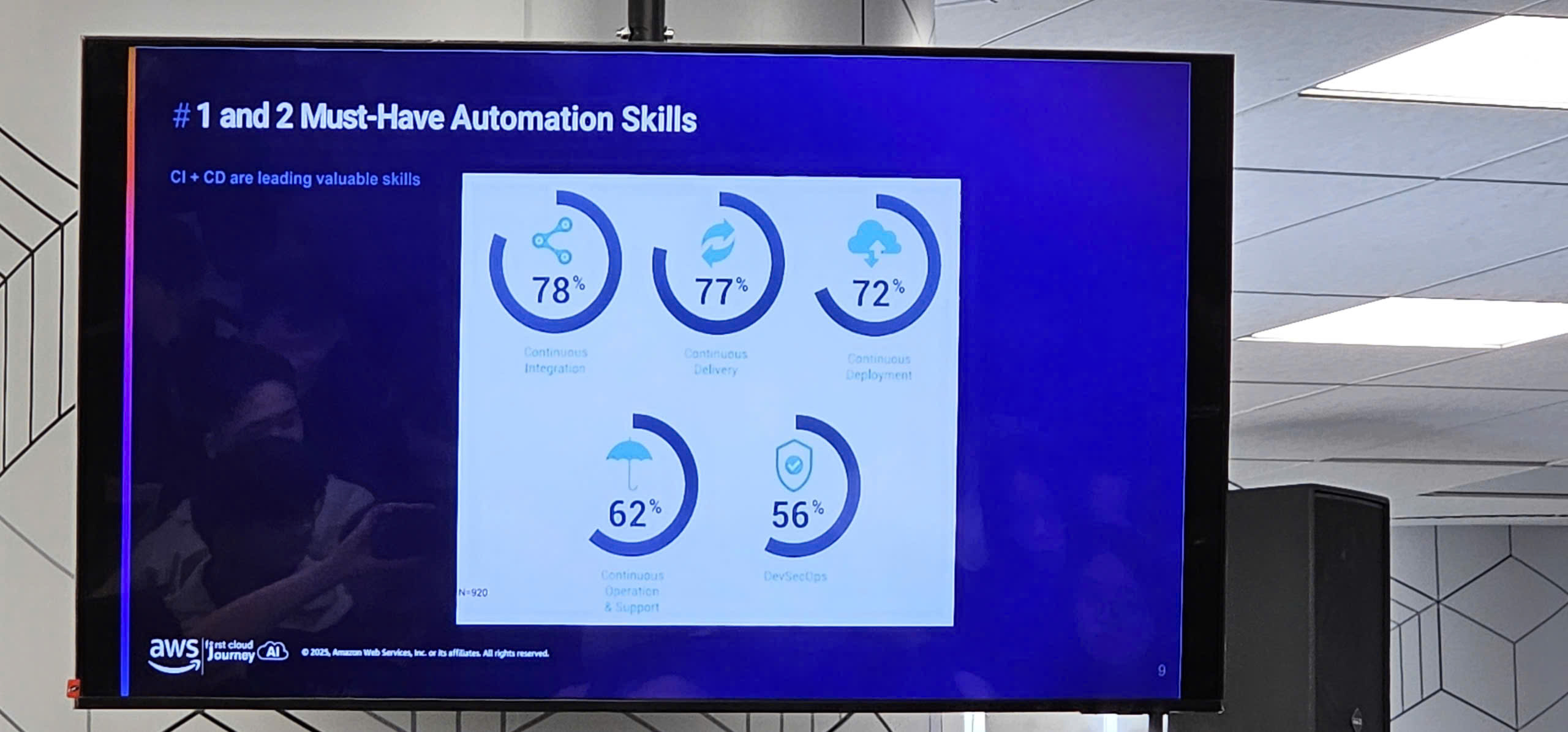
- Implement CI/CD: Start with CodePipeline for automated deployments
- Adopt IaC: Use CloudFormation or CDK for infrastructure management
- Containerize applications: Migrate to ECS or EKS for scalability
- Enhance monitoring: Set up CloudWatch dashboards and X-Ray tracing
- Practice DevOps culture: Foster collaboration between teams
- Measure and improve: Track DORA metrics and optimize processes
- Pursue certification: AWS DevOps Engineer certification validates skills
Event Experience
Attending the “DevOps on AWS Workshop” was an intensive full-day learning experience that provided comprehensive coverage of DevOps practices and AWS services. Key experiences included:
Learning from AWS Experts
- AWS DevOps Specialists provided deep insights into CI/CD best practices and automation strategies
- AWS Solutions Architects demonstrated real-world container deployments and monitoring setups
- Practical examples illustrated how companies successfully implement DevOps on AWS
- Expert guidance on choosing the right tools and services for specific use cases
Hands-on Demonstrations
- Witnessed complete CI/CD pipeline creation from scratch
- Saw Infrastructure as Code in action with both CloudFormation and CDK
- Explored container deployment across ECS, EKS, and App Runner
- Learned monitoring and tracing setup for production systems
- Understood the differences between various deployment strategies
Understanding DevOps Practices
- Gained insights into DevOps culture beyond just tools and automation
- Learned about DORA metrics and how to measure DevOps success
- Understood the importance of observability in modern systems
- Discovered best practices from real-world case studies
- Explored incident management and blameless postmortem processes
Networking and Community Building
- Connected with fellow developers and DevOps engineers
- Exchanged ideas about DevOps transformation challenges
- Built relationships with AWS experts for ongoing support
- Joined the AWS DevOps community for continuous learning
Practical Insights Gained
- CI/CD automation significantly reduces deployment time and errors
- Infrastructure as Code ensures consistency and repeatability
- Containers provide flexibility and portability for applications
- Monitoring and observability are critical for production systems
- DevOps culture is as important as the tools and technologies
Next Steps
- Begin implementing CI/CD pipelines using AWS CodePipeline
- Adopt Infrastructure as Code with CloudFormation or CDK
- Containerize applications and deploy to ECS or EKS
- Set up comprehensive monitoring with CloudWatch and X-Ray
- Work towards AWS DevOps Engineer certification
- Continue engaging with the AWS DevOps community
Overall, this full-day workshop provided a comprehensive introduction to DevOps on AWS, covering everything from CI/CD pipelines to container services to monitoring and observability. The hands-on demonstrations and real-world case studies made complex concepts accessible and immediately applicable. The key takeaway is that DevOps is not just about tools, but about culture, collaboration, and continuous improvement. AWS provides a complete ecosystem for implementing DevOps practices, making it easier than ever to build, deploy, and operate applications at scale.
Event Pictures